
Oak Island has always felt larger than its shoreline. The deeper the investigation goes, the more the mystery seems to stretch beyond Nova Scotia, across old maps, European history, religious orders, and sea routes that once connected distant corners of the Atlantic. That is why the team’s trip to Terceira in the Azores stands out as more than a simple research visit. Rick and the group explored Nossa Senhora da Conceição, a church linked in discussion to the Order of Christ, an organization often connected to the legacy of the Knights Templar. The trip did not establish that Templar treasure reached Oak Island, and it did not settle the island’s long-running questions. But it may offer something just as important: a wider historical setting for one of the mystery’s most debated theories.
The Atlantic Detour That Changed the Scale of the Search
The Azores trip matters because it moves the Oak Island conversation out of a single island in Canada and into the wider Atlantic world. Instead of focusing only on the Money Pit, local terrain, or artifacts found in the soil, Rick and the team followed a historical trail toward Terceira, one of the islands in the Azores. Their attention turned to Nossa Senhora da Conceição, a church brought into the discussion because of its possible connection to the Order of Christ. That detail gives the trip a different tone from a standard field visit. It suggests that the team was not only looking for objects, but for context.
For new readers, the key idea is not difficult to understand. The Knights Templar were dissolved in the early 14th century, but some theories argue that parts of their knowledge, influence, or material legacy may have continued through later organizations. The Order of Christ is often brought into that discussion because of its historical connection to Portugal and its association with the aftermath of the Templar era. In the Oak Island context, that link becomes interesting because Portugal was deeply tied to Atlantic navigation and exploration. If a theory involves movement from Europe toward the western Atlantic, then Portuguese history naturally becomes part of the conversation. Still, that does not mean the theory has been confirmed.
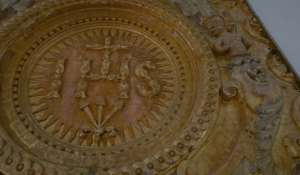
The trip to Terceira gives the investigation a new kind of geography. Oak Island is often framed through underground shafts, shoreline features, and specific lots where artifacts have been found. The Azores, by contrast, introduce churches, maritime routes, old religious orders, and the possibility of staging points across the ocean. The theory being explored is that Templar-linked groups or their successors may have stored or moved valuable material through the Azores before any possible connection to Oak Island between the 13th and 17th centuries. That remains a theory, not a proven historical chain. But it helps explain why a church in the Azores could suddenly feel relevant to a mystery thousands of miles away.
Why the Order of Christ Connection Raises Bigger Questions
The Order of Christ connection is compelling because it gives the Templar theory a bridge instead of a leap. A direct jump from medieval knights to Oak Island can feel too large if it is not supported by evidence. But when the discussion moves through Portugal, Atlantic navigation, and organizations connected to the Templar legacy, the theory gains a more structured path to examine. That does not make it true, but it makes the question easier to frame. The team wondered whether the Azores could have served as an important point in a longer movement of people, knowledge, or guarded material. If that possibility is being studied carefully, it becomes a historical inquiry rather than a wild claim.
This is where the Azores become more than scenery. Islands in the Atlantic have long mattered because they can function as stopping points, navigational markers, and cultural crossroads. In a theory involving hidden movement, maritime planning, or old European networks, a place like Terceira naturally invites attention. The church setting adds another layer because religious spaces often carry symbols, records, architecture, and local traditions that may preserve traces of older affiliations. None of that automatically proves a hidden treasure route. But it does appear to raise questions about whether Oak Island’s story could be linked to a broader Portuguese and post-Templar world.
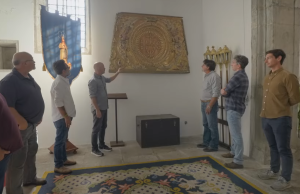
The timeline is also part of the intrigue. The theory being discussed stretches across a long period, roughly from the 13th to the 17th century, which means it does not depend on one narrow moment. That broad timeline can make the theory flexible, but it also requires caution. A longer timeline leaves more room for possible movement, inheritance, and reinterpretation, yet it also makes proof harder. Objects, documents, and symbols would need to be placed in clear context before any strong conclusion could be drawn. Without that, the Azores remain a fascinating clue path rather than a finished explanation.
What makes this angle valuable for the Oak Island mystery is that it shifts the question from “where is the treasure?” to “how would such a story have traveled?” That is a more mature and useful way to approach the Templar debate. If anything ever moved from Europe toward the western Atlantic, it would have required routes, planning, safe locations, and people with access to maritime knowledge. The Azores theory gives the team a way to examine those conditions without insisting that the final answer has already been found. It turns the investigation into a study of networks, not just hiding places.
For those following the investigation, the Order of Christ thread also helps explain why the Templar theory keeps returning. It is not only the drama of knights and lost treasure that keeps the idea alive. It is the possibility that historical institutions, symbols, and seafaring powers may have carried older traditions into a new age of Atlantic exploration. The theory may suggest that Oak Island belongs to a much larger map, but it has not been confirmed. That tension is exactly why the Azores trip feels important. It adds depth without closing the case.
A Wider Map, But Still No Final Answer
The Azores trip remains important because it shows how Oak Island can no longer be understood only through digging. The island’s clues have pushed the investigation toward history, geography, and the movement of ideas across the ocean. A church in Terceira may seem distant from the Money Pit at first, but within the Templar theory it becomes part of a possible route worth examining. That does not mean the route is real. It means the team is looking for the kind of historical context that could make one of the island’s boldest theories more understandable.
At the same time, the mystery must remain open. A link between the Order of Christ and the Templar legacy is not the same as evidence that treasure was stored in the Azores and later moved to Oak Island. A church visit can offer atmosphere, symbols, and context, but it cannot stand alone as proof of a transatlantic treasure movement. The strongest version of this story is careful with its claims. It says the Azores may matter because they help explain how a theory could be investigated, not because they settle what happened.
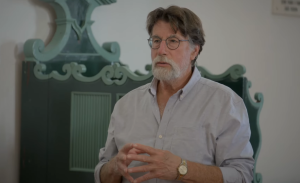
That distinction is what makes the article’s angle clean and valuable. It avoids turning history into rumor while still recognizing why the trip captured attention. Oak Island has always been strongest when the mystery feels connected to real places, real institutions, and real questions about the past. The Azores provide all three. They offer a setting tied to Atlantic movement, a religious and historical backdrop linked to the Order of Christ, and a possible bridge for theories involving medieval Europe. Whether that bridge leads anywhere remains unclear.
In the end, the Azores do not solve Oak Island’s Templar debate, but they may help explain why the debate refuses to fade. They widen the map, deepen the timeline, and place the island inside a larger Atlantic story. The trip to Terceira suggests that the search is not only about what lies underground, but also about what may have moved across oceans, through institutions, and into legend. That is why the Order of Christ connection feels worth watching. It is not the final answer, but it may be one of the most intriguing paths still open.
