
Jeremy Clarkson has responded after Chris Packham criticised the way Clarkson’s Farm presents agriculture during an appearance on Celebrity Gogglebox. Their exchange began with an animated opening sequence, but it quickly developed into a wider argument about farming, conservation and television. The disagreement reveals why Clarkson’s programme is increasingly judged not only as entertainment, but also as an influential representation of British rural life.
How the Opening Credits Became Part of a Larger Farming Debate
The dispute began when Chris Packham watched the animated opening sequence of Clarkson’s Farm during an episode of Celebrity Gogglebox. The sequence presents a cheerful rural landscape filled with colourful animals, machinery and cultivated fields, creating a playful introduction to the programme. Packham argued that this image did not reflect the reality of many modern farms. He described an agricultural system in which large areas can be devoted to monocultures, land can be treated with chemicals and fertilisers, and animals can be kept indoors under intensive conditions. His comments appeared to challenge the comfortable image of farming created by the animation rather than provide a detailed assessment of Diddly Squat Farm itself. Packham’s wider point was that an attractive picture of the countryside can make it easier for viewers to overlook serious questions involving biodiversity, soil health, chemical use and animal welfare. What looked like a brief reaction to a television introduction therefore became a criticism of how agricultural life is presented to the public.
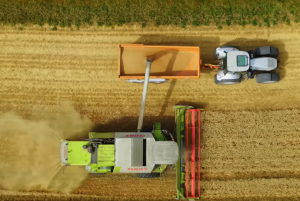
Jeremy Clarkson later answered Packham in his column for The Sun, using the direct and confrontational language that has long defined his public style. He described Packham as “endlessly angry” and dismissed the strength of his reaction to what Clarkson called the “Winnie the Pooh ish” opening credits of his farming programme. Clarkson also stated that Packham had visited Diddly Squat Farm in 2012, suggesting that the naturalist would have raised concerns at the time if he had witnessed the conditions described on Celebrity Gogglebox. That response moved the discussion away from agriculture as a national industry and towards the reality of Clarkson’s own land. It also exposed the main difference between the two positions, since Packham was discussing what the animation might imply about farming in general, while Clarkson was defending the purpose of a television title sequence and the record of his own farm. Neither man was answering precisely the same question, which may help explain why their comments appeared to pass one another rather than create a direct discussion. Packham was warning against romanticising modern agriculture, while Clarkson was resisting the idea that a playful introduction should be treated as a factual claim about every farm in Britain.
Why Clarkson’s Response Defends the Programme’s Wider Purpose
Clarkson’s reply may have been personal in tone, but it also represented a broader defence of how Clarkson’s Farm communicates agricultural issues to a mainstream audience. The programme has never relied on formal lectures or technical explanations alone. Instead, it uses humour, conflict and the personalities of Jeremy Clarkson, Kaleb Cooper, Charlie Ireland and Lisa Hogan to make complex farming subjects easier to understand. Machinery failures, changing weather, financial pressure, livestock problems and planning restrictions are regularly presented through practical situations rather than abstract discussions. Although the programme is entertaining, it does not consistently portray farming as simple, comfortable or guaranteed to succeed. Clarkson’s plans often meet resistance from the land, the weather, local regulations or the people with more agricultural experience than he has. This pattern may explain why he reacted so strongly to Packham’s criticism, because he appears to believe the programme should be judged by the challenges shown across entire episodes rather than by a short animated introduction. Based on what the series has presented so far, Diddly Squat is frequently shown as a business in which effort does not always produce a reliable financial return.
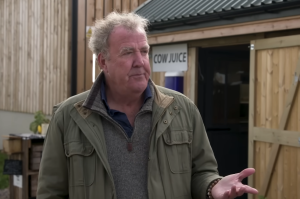
The full programme also complicates the suggestion that Clarkson’s Farm offers only a comforting rural fantasy. Viewers have seen crops affected by weather, animals requiring constant attention, new business ideas becoming difficult to operate and administrative decisions creating expensive consequences. Charlie Ireland often reminds Clarkson that enthusiasm cannot replace careful planning, while Kaleb Cooper repeatedly demonstrates how much practical knowledge is required to manage the land effectively. These moments create comedy, but they also show that farming involves responsibility, uncertainty and a limited margin for error. At the same time, Packham’s concerns should not be rejected merely because Clarkson’s Farm includes genuine hardship. Diddly Squat represents one business, one group of people and one set of local circumstances, so it cannot provide a complete picture of British agriculture. One possible interpretation is that Clarkson and Packham are defending two different forms of rural advocacy. Packham approaches the subject through conservation, biodiversity and animal welfare, while Clarkson increasingly speaks from the perspective of farmers dealing with costs, regulations and the practical need to keep their businesses operating. Both viewpoints can raise legitimate concerns, even when the language used by the two men makes agreement appear unlikely.
What the Exchange Reveals About Farming on Television
The most important part of this disagreement is not the personal criticism exchanged between two well known television figures. It is the growing expectation that Clarkson’s Farm should explain the wider agricultural industry while still functioning as accessible entertainment. The programme has introduced farming subjects to viewers who may previously have known little about crop production, livestock management, agricultural machinery, rural planning or the economics of running a farm. Its success comes partly from allowing people to understand these subjects through recognisable characters and real consequences. When Clarkson makes an expensive mistake or a plan fails, the practical result gives the audience a clearer sense of how quickly farming decisions can affect money, time and land. That accessibility has value because it brings rural issues into conversations far beyond traditional farming communities. However, the influence created by such a large audience also means that the programme will face criticism over what it simplifies, what it emphasises and what it leaves outside the frame. Clarkson may see the title sequence as harmless fun, but critics such as Packham may view it as part of a larger cultural image that separates food production from its environmental consequences.
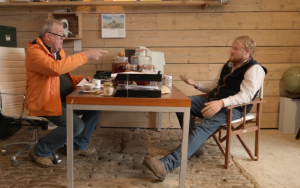
British agriculture includes family farms, large commercial operations, livestock businesses, arable farms, organic producers and highly specialised systems, so no single programme could represent all of them fairly. Clarkson’s Farm does not need to become a formal environmental documentary in order to remain credible, but the dispute shows that its treatment of conservation and sustainability will continue to attract attention. Future episodes may be judged closely whenever they address chemical use, animal welfare, wildlife protection or the tension between environmental goals and commercial survival. It remains unclear whether Packham will respond publicly or whether the disagreement will develop beyond the comments already reported. There is also no confirmed indication that the exchange will become part of the programme itself, so any suggestion of an on screen confrontation would remain speculation. Even without another response, the argument has already demonstrated the unusual position occupied by Clarkson’s Farm. It is produced as entertainment, yet many viewers and commentators now treat it as an important account of British farming. Clarkson’s reply defended his programme against what he considered an unfair interpretation, but Packham’s criticism also revealed how much influence the series now carries. A few seconds of cheerful animation were enough to begin a serious discussion about who gets to define the reality of agriculture and how honestly that reality can be presented on television
