
The Anza Borrego UAP Investigation became one of the season’s most intriguing missions when the team encountered a strange light hovering close to the desert floor. The location was presented in the episode as a former NASA UFO monitoring site, although the transcript does not provide independent documentation confirming that description. What the investigators did record was an apparently stationary source of light in an open area where no obvious road or vehicle could be seen. Thermal equipment also failed to show the kind of heat signature they expected from an ordinary engine or conventional light source. None of those observations established what the object was, but together they made a simple explanation harder to identify in the moment. More importantly, the encounter offered a valuable test of the team’s wider theory that unexplained activity may not be limited to one famous ranch or one type of landscape.
A Remote Desert Site Becomes Part of a Wider Search
The Anza-Borrego UAP Investigation was not presented as an isolated hunt for a mysterious object, but as part of a broader attempt to compare unusual events across several locations. Brandon Fugal described the season’s mission as an opportunity to examine what the group already knew while expanding the search for measurable similarities and differences elsewhere. Andy Bustamante and Paul Beban travelled beyond the team’s familiar research base, working with specialists and local participants at sites connected to separate reports of unexplained activity. Their goal was not simply to collect dramatic footage, but to determine whether recurring patterns might emerge when the same investigative mindset was applied in different environments. That approach gave the California desert visit a larger purpose: it could be evaluated alongside evidence gathered in Arizona, Florida and other remote regions.

During the Anza Borrego sequence, the investigators focused on a light visible near ground level in the middle of an open desert. One team member immediately considered whether it might be headlights or another ordinary source, but the location did not appear to offer a road on which a vehicle could be travelling. The light also seemed largely stationary, reducing the visual impression of a car moving across the landscape. When the team examined it with thermal equipment, they reported that no clear heat source could be seen, which added another layer of uncertainty. These details did not rule out every conventional explanation, because distance, atmospheric conditions and equipment limitations can complicate nighttime observations. However, they did explain why the team considered the light worth documenting rather than dismissing it after a brief glance.
The site’s alleged connection to NASA also contributed to the atmosphere surrounding the investigation, but that claim requires careful wording. In the transcript, the narrator identifies the area as a location that was once used as a NASA UFO monitoring site, yet no supporting records or historical documents are discussed in the supplied material. For that reason, the description is best understood as part of the programme’s presentation rather than an independently established fact. The sighting itself does not depend on that historical claim, because the team’s cameras and instruments captured the light regardless of the site’s past. Separating those two elements makes the encounter more credible: one is a claim about the location’s history, while the other is a direct observation made during the expedition.
Why the Desert Light Matters Beyond a Single Sighting
What gives the Anza Borrego UAP Investigation its significance is not that it produced a definitive answer, but that it added a different type of anomaly to the season’s collection. At Rock Art Ranch, the team observed aerial objects that appeared to change direction, alter speed or disappear from view. In the Florida Everglades, they documented clusters of coloured lights among the trees and later reviewed footage of objects moving through the distance. The California desert encounter was quieter and visually less dramatic, yet it presented a contrasting puzzle: a light close to the ground that appeared stable and lacked an obvious thermal signature. That variety led the investigators to consider whether unexplained phenomena might appear in several forms rather than following one predictable pattern.
The contrast also raises an important question about classification. A fast moving object in the sky and a stationary light near the ground may both remain unidentified, but that does not mean they share the same origin. They could involve unrelated environmental effects, distant aircraft, optical distortions, human activity or causes that were not visible from the team’s position. The evidence may suggest that multiple locations produce difficult observations, but it does not establish that one phenomenon connects them all. By resisting that leap, the Anza Borrego UAP Investigation becomes more useful as an example of uncertainty being documented rather than converted into a dramatic conclusion.
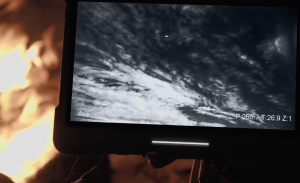
The investigators themselves acknowledged this wider problem during their season review. Travis Taylor questioned whether unusual objects were genuinely becoming more common or whether better equipment and greater experience had simply made the team more effective at detecting them. That distinction matters because an increase in recorded sightings does not automatically indicate an increase in unexplained activity. Infrared cameras, frame-by-frame analysis and repeated observation can expose details that would previously have gone unnoticed. The Anza Borrego light could therefore point to improved detection rather than a new or escalating phenomenon. At present, the available footage appears to raise questions, but the cause of the light remains unclear and has not been confirmed.
An Open Mystery Built on Observation, Not Certainty
The lasting value of the Anza-Borrego UAP Investigation lies in the way it reflects the team’s changing approach to unexplained reports. Rather than relying on second-hand stories or old footage, the investigators travelled to remote locations and attempted to record unusual events while they were happening. That method does not guarantee answers, but it creates material that can be reviewed, compared and challenged after the expedition ends. In this case, the important facts are limited but clear: the team saw a light, found no obvious road leading to it, described it as stationary and reported no visible heat source on their equipment. Everything beyond those observations remains interpretation.
That boundary between evidence and theory is especially important for audiences interested in the mystery but wary of exaggerated claims. The light might eventually receive a conventional explanation, or it may remain unresolved because the available data are too limited to identify it confidently. Neither outcome would erase the value of documenting the event accurately. An unexplained observation is not proof of an extraordinary origin, but it can still reveal weaknesses in existing assumptions and encourage better-designed follow up experiments. The most responsible conclusion is therefore also the most compelling one: something unusual was recorded in the desert, yet the evidence does not currently tell us exactly what it was.
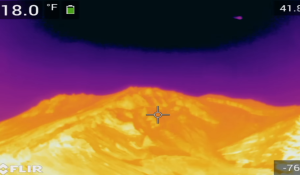
As future investigations revisit remote landscapes, the California encounter may serve as a useful reference point for how similar lights should be examined. Additional cameras, precise distance measurements, longer thermal recordings and independent checks of local traffic or aircraft activity could narrow the list of possibilities. Historical research may also clarify whether the location truly had the NASA connection described in the episode, separating documented history from the mythology that often surrounds secretive desert sites. Until such evidence emerges, the Anza Borrego UAP Investigation remains an open chapter rather than a solved case. Its appeal comes not from claiming that the team found an impossible object, but from showing how a quiet light in an empty landscape can expose just how difficult careful identification can be.
