
What began as a television experiment about Jeremy Clarkson learning to run a farm has gradually developed into a much broader story. Diddly Squat now helps viewers understand the financial pressure, unpredictable weather and difficult decisions that shape modern agriculture. The programme is no longer driven only by Jeremy’s mistakes or ambitious ideas. It has become an accessible window into an industry that many people depend on but rarely see closely.
From Jeremy’s Personal Challenge to a Wider Farming Story
When Clarkson’s Farm began, its central idea appeared simple. Jeremy Clarkson had taken responsibility for running Diddly Squat and quickly discovered that owning agricultural land was very different from knowing how to manage it. His limited experience created many of the programme’s funniest moments, particularly when his confidence collided with Kaleb Cooper’s practical understanding of the work. Charlie Ireland regularly explained the financial and administrative limits surrounding Jeremy’s plans, while Gerald Cooper helped connect the farm to its local history and community. The early appeal came from watching a familiar television personality enter a world where enthusiasm could not replace knowledge.
That format also gave viewers an unusually clear introduction to the complexity of farming. A decision about when to plant could be affected by rain, soil conditions, machinery and the availability of workers. An apparently simple livestock project could require new fencing, veterinary support, additional feed and constant attention. Even purchasing equipment involved questions about size, cost, maintenance and whether it was suitable for the land. Through Jeremy’s learning process, the audience began to understand that farming depends on hundreds of connected decisions rather than one dramatic harvest. The humour made those lessons accessible, but the difficulties behind them remained genuine.
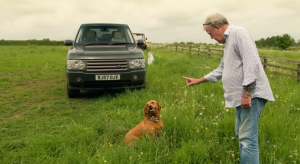
As the programme developed, Diddly Squat’s challenges became less specific to Jeremy and more representative of wider agricultural pressures. Rising operating costs, uncertain crop income, difficult weather and the need to create additional revenue repeatedly shaped the farm’s direction. Jeremy’s ideas for the farm shop, restaurant and pub were often presented as bold experiments, yet they also reflected a practical need to earn money beyond traditional crop production. These ventures created new opportunities, but they also introduced staffing problems, supply challenges and extra responsibilities. The farm gradually stopped looking like a celebrity hobby and began to resemble a complicated rural business trying to remain sustainable.
Why the Difficulties at Diddly Squat Matter Beyond the Programme
One of the programme’s greatest strengths is its ability to make agricultural uncertainty understandable to people who may never have worked on a farm. Viewers can see how months of preparation may still be undermined by a short period of bad weather. They can also see why a successful-looking harvest does not automatically produce a strong financial return. Fuel, seed, fertiliser, machinery, animal care and labour all create costs before the final crop is sold. The result is a business in which large amounts of money may move through the farm without creating the level of profit an outsider might expect.
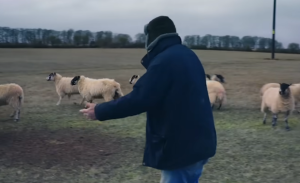
Diddly Squat also demonstrates why diversification has become such an important subject in modern farming. The farm shop allows products to be sold directly to visitors, while the pub creates another route for local food to reach customers. These projects may appear separate from the fields, but they are closely connected to the wider challenge of keeping the farm financially active throughout the year. They can reduce dependence on a single crop or harvest, yet they also require different skills from traditional agricultural work. Managing customers, employees, suppliers and hospitality costs can become as demanding as looking after the land.
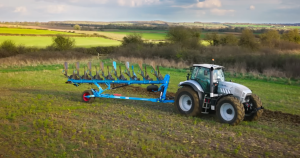
The farm’s experiments with new technology add another layer to that discussion. Laser field scanning, automated equipment and robot tractors offer the possibility of completing work more accurately while reducing some repetitive labour. However, these machines also raise questions about cost, reliability and whether technology can fully understand the changing conditions of a working farm. Kaleb’s practical knowledge remains essential because data alone does not always explain when a field is too wet, when the weather is about to change or when a planned job should be delayed. The programme therefore presents technology as a useful tool rather than a simple replacement for agricultural experience.
The Programme Has Become Bigger Than Jeremy Clarkson
The people surrounding Jeremy are central to the programme’s wider meaning. Kaleb represents local knowledge and the perspective of a younger farmer attempting to build a long-term future in the industry. Charlie brings attention to budgets, planning and the consequences of decisions that may initially appear exciting. Lisa Hogan shows how retail, hospitality and animal care have become connected to the wider Diddly Squat operation. Gerald provides continuity with the land, the community and the farming traditions that existed long before the cameras arrived.
Together, these figures prevent the programme from becoming only a story about a wealthy celebrity discovering that farming is difficult. Jeremy may remain the central personality, but he is rarely presented as the only person capable of understanding what the farm needs. Many of the strongest moments come when his ideas are challenged, corrected or reshaped by people with different forms of experience. That balance gives the programme credibility because it shows that running a farm depends on cooperation rather than individual confidence. It also allows viewers to see how practical knowledge, business planning and local understanding must work together.
The programme should not be treated as a complete representation of every British farm. Jeremy has financial resources, media attention and commercial opportunities that many farmers do not possess. Diddly Squat’s experience cannot automatically be applied to every region, farm size or agricultural sector. However, those advantages make the repeated difficulties even more revealing. When a high-profile farm with several additional businesses still faces uncertainty, viewers are encouraged to consider how less visible farms manage similar pressures.
Clarkson’s Farm has therefore become more than entertainment built around Jeremy’s personality. It remains funny because ambitious ideas continue to meet difficult land, unpredictable weather and the practical objections of the people around him. Beneath that familiar pattern, however, the programme has created a direct connection between a large audience and the realities of food production. It gives agricultural work a place in conversations that might otherwise remain limited to rural communities or specialist publications. Its greatest achievement may not be teaching viewers how to farm, but helping them understand why farming is so difficult to sustain.
Diddly Squat began as Jeremy Clarkson’s personal experiment, but it no longer belongs only to his story. It has become a place where questions about income, technology, diversification, risk and rural survival can be seen through the experiences of people doing the work. The programme does not offer a complete solution to the challenges facing agriculture, nor should it be expected to speak for every farmer. What it provides is visibility, context and a reason for millions of viewers to pay attention. That is why Clarkson’s Farm has grown into something much bigger than the celebrity who first brought the cameras to the field.
