
At Skinwalker Ranch, technology often becomes the thin line between mystery and measurement. One device that has drawn major attention is the FLIR T1030, a high-definition thermal imaging camera designed to detect heat signatures beyond normal human vision. In the provided investigation transcript, Andy Bustamante explains that this camera had not previously been used during earlier experiments at the ranch, making it a major new addition to the team’s research toolkit. What it captured during the connected field investigation did not provide a final answer, but it did raise a compelling question for the larger ranch mystery. If ordinary cameras only show what human eyes can already recognize, how much unusual activity might still be hidden outside the visible spectrum? For those following the investigation, the FLIR T1030 is not just another piece of equipment. It is a new way of looking into the dark.
A New Kind of Eye on the Ranch Mystery
The FLIR T1030 enters the investigation as part of a broader effort to understand unusual aerial activity and environmental anomalies linked to Skinwalker Ranch. In the transcript, Andy Bustamante describes it as the most sophisticated version of FLIR available to the team, while also noting that it had not been available during earlier experiments at the ranch. That detail immediately gives the device importance because the ranch investigation has always depended on finding better ways to document unusual events. Instead of relying only on eyewitness reactions or ordinary video, the team increasingly turns to specialized tools that can detect what normal cameras may miss. The FLIR T1030 fits that mission because it does not see the world through visible light. It sees heat.
Thermal imaging works by detecting infrared radiation, which is energy naturally emitted by objects as heat. A standard camera records visible light, but a thermal camera converts temperature differences into an image that investigators can study on screen. In dark conditions, this becomes especially valuable because a warm moving object may stand out clearly against a colder background, even if the human eye sees nothing unusual. The FLIR T1030 was aimed at the night environment to search for thermal signatures that might otherwise pass unnoticed. That capability matters deeply in a place where many reported events appear suddenly, vanish quickly, or happen at the edge of ordinary perception. It gives the team a chance to examine the unknown through temperature rather than appearance.
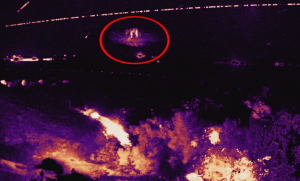
The team did not use the FLIR T1030 as a standalone device. According to the transcript, the investigation also involved flight tracker data, satellite tracker data, UFODAP sky-monitoring systems, and radio spectrum equipment running alongside the thermal camera. That layered setup is important because it helps separate mystery from assumption. If something appears on thermal footage, investigators can compare it against known aircraft, satellites, and environmental data before describing it as unidentified. In that sense, the camera does not prove anything by itself. What it does offer is a stronger foundation for asking sharper, more disciplined questions.
The Thermal Moments That Made the Team Look Twice
The most intriguing thermal moments described in the transcript occurred after the team played the 192-hertz tone, a frequency connected in the investigation to earlier ranch experiments. Once that tone was introduced, the radio spectrum analyzer began showing unexpected peaks in the 1.4 to 1.8 gigahertz range. The program described this range as potentially associated with Earth-to-space or space-to-Earth communication, although the source of the signal was not identified. The timing caught the team’s attention because the activity appeared to correspond with the tone. Still, the transcript does not establish that the tone caused the readings. It only shows that the sequence was unusual enough for the investigators to document carefully.
Then the FLIR T1030 began capturing moving thermal objects in the sky. The investigators reviewed one object frame by frame, noting that its movement seemed unusual against a cold section of the sky. Another object appeared to dart across the camera’s view at an angle, while additional thermal signatures showed movement patterns the team could not immediately explain. Some of the objects seemed similar in shape and heat signature, even when they moved at different speeds. Because the flight and satellite tracking tools did not immediately identify them, the team referred to the objects as UAPs, meaning unidentified aerial phenomena. That term is important because unidentified does not mean extraordinary; it simply means the objects were not identified during the investigation.
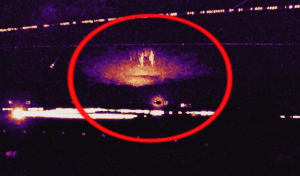
This is where the footage becomes especially compelling for the wider ranch mystery. The FLIR T1030 did not settle what the objects were, and the transcript does not present the footage as a final explanation. However, the combination of thermal captures, radio spectrum changes, and the 192-hertz tone appears to raise questions about whether certain phenomena may be easier to detect through instruments than through eyesight alone. The team wondered whether the thermal objects might represent something that ordinary visual observation often misses. That possibility has not been confirmed, but it gives future investigations a clear reason to use similar equipment under controlled conditions. For people interested in the mystery, the most fascinating part is not that the camera captured something strange. It is that the footage created a new path for asking what else might be waiting beyond visible light.
Why These Captures Still Matter to the Ranch Investigation
The deeper value of the FLIR T1030 is not simply that it recorded strange-looking objects. Its real importance lies in how it changes the way the ranch mystery can be studied. A witness may describe an orb, a flash, or a moving object, but thermal imaging can show whether something produced or reflected heat at the time it was observed. That does not automatically identify the object, yet it gives investigators measurable data that can be compared with other instruments. For a mystery built around difficult questions, that kind of evidence is more useful than speculation alone. It allows the team to move from “something was seen” to “something was recorded under specific conditions.”
At the same time, the footage remains open to interpretation. A thermal camera can detect heat, but it cannot always explain the source, distance, altitude, or nature of what it sees without additional analysis. That is why careful language matters when discussing these moments. The objects captured by the FLIR were called unidentified because the team did not have an immediate explanation, not because their origin had been determined. The readings may point to something worth studying further, but they do not close the larger case. For audiences following the investigation, that uncertainty is part of what keeps the story so compelling.
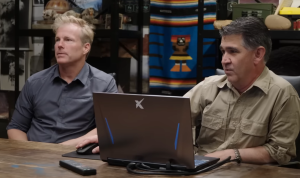
The FLIR T1030 may become one of the most important tools in future ranch-related investigations because it expands the team’s view beyond ordinary sight. The transcript shows how quickly the atmosphere changed once thermal objects appeared, especially alongside unusual radio readings and the 192-hertz tone experiment. Those moments did not solve the mystery, but they gave researchers a stronger reason to keep examining what current technology might still be missing. If the ranch has taught viewers anything, it is that unexplained activity often becomes more complex when better instruments are brought in. The mystery remains open, and the FLIR T1030 does not provide a final answer. But it may help reveal which questions deserve to be asked next.
