
Across years of experiments at the Utah property, rockets have become one of the research team’s most recognisable tools. Yet an equally interesting question often receives less attention: why are so many launches directed toward the same patch of air above the Triangle? The location has repeatedly been connected with unusual instrument readings, interrupted signals and aerial observations, but none of those incidents has established what may be causing them. Rather than abandoning the site after one unexplained result, the researchers have continued returning with new equipment and increasingly complex tests. That repetition is not simply designed to create a dramatic launch sequence. It allows the team to examine whether unusual effects can be observed again under altered conditions. The Triangle therefore matters not because it contains a proven answer, but because it has become the investigation’s most important point of comparison.
How the Triangle Became a Testing Ground
The Triangle is an area marked by three points on the property, but its importance has gradually expanded beyond its shape on a map. Earlier investigations drew attention to the airspace above it after equipment produced puzzling results and team members reported unusual aerial activity during experiments. The researchers subsequently used rockets, helicopters, lasers, drones and GPS devices to examine the same general region from different directions. Official episode descriptions have repeatedly identified the Triangle as the location of major aerial and technological experiments, including rocket launches into the elevated zone above the property. This history has turned an otherwise ordinary-looking piece of land into a carefully watched experimental site.
Rockets are especially useful because they can carry sensors rapidly through several layers of altitude while ground-based equipment records what happens around them. A launch creates a known path, a known starting time and an event that can be compared with radar, GPS, radio-frequency and visual observations. When something unexpected appears, researchers can examine whether it occurred before, during or after the rocket entered the targeted airspace. This does not automatically mean the rocket triggered the event, since two events happening close together may still be unrelated. However, the controlled timing gives the team a clearer framework than simply waiting for something unusual to appear. In that sense, the rocket is less a weapon aimed at a mystery than a moving probe designed to disturb and measure a specific environment.
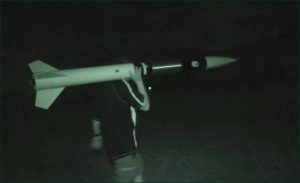
The attraction of the Triangle also comes from the accumulation of earlier observations in the same vicinity. During one experiment described by the broadcaster, GPS canisters dropped from a helicopter appeared to move in directions that did not match the expected influence of the wind, while some data suggested an unusual change in their descent. Other episodes have involved aerial tests, drilling near the Triangle and launches toward a zone roughly a mile above the property. These incidents remain open to interpretation, and the available programme material does not establish that an invisible structure or unknown force was responsible. What they provide instead is a collection of irregular results attached to one repeatable location. That makes the Triangle difficult for the team to ignore, even when individual anomalies may later receive ordinary explanations.
Repetition May Be More Important Than the Rockets
The most valuable element of returning to the Triangle is not necessarily the spectacle of another launch. It is the opportunity to repeat an experiment while changing one or two important variables. Researchers can adjust a rocket’s altitude, payload, launch direction or timing while introducing different radar systems, cameras and radio-frequency monitors. If an unusual reading appears only once, it may have resulted from equipment failure, environmental interference or incomplete data. If a similar pattern appears during several differently designed experiments, the case for investigating it becomes stronger, although the underlying cause still remains uncertain. Repetition therefore transforms a dramatic moment into something that can at least begin to be compared.
This helps explain why the team does not simply move to a new location after every puzzling result. Scientific testing depends on establishing a baseline, and the Triangle has gradually become the closest thing the investigation has to a long-term aerial laboratory. Launching from the same area allows Erik Bard and the monitoring team to compare new readings with information collected during previous seasons. Dr. Travis Taylor and the other researchers can then ask whether a disturbance appears at a similar altitude, follows the same shape or occurs when comparable technology is used. Those patterns may suggest that the location deserves closer examination, but they do not identify a cause on their own. The distinction matters because consistency in a measurement is not the same as confirmation of an extraordinary explanation.
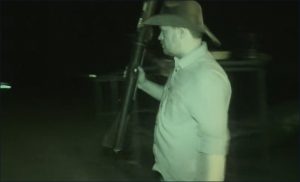
The launches also appear designed to test the team’s broader idea that certain actions may be followed by unusual activity. Previous episodes have connected rocket experiments with sightings of unidentified objects and unexpected behaviour from tracking equipment, leading the researchers to wonder whether energetic tests somehow stimulate the environment. That possibility remains speculative because temporal association alone cannot show that one event caused another. Aircraft, satellites, atmospheric conditions, software errors and signal interference must all be considered when interpreting what instruments display. Even so, launching at a predetermined moment gives the team a narrow window in which several independent systems can search for changes. The Triangle’s real importance may therefore lie in its ability to bring multiple streams of evidence together at the same place and time.
A Familiar Location With an Unfinished Story
The Triangle remains compelling because it sits between two very different interpretations. To those following the investigation, repeated irregularities may suggest that the airspace has properties the team has not yet understood. A more cautious interpretation is that the location has received far more monitoring than other parts of the property, making it statistically more likely that errors and unusual but natural events will be captured there. Both possibilities deserve consideration when the programme presents another unexpected reading. Intensive observation can uncover meaningful patterns, but it can also produce a larger number of ambiguous signals. The challenge is determining which results remain unusual after equipment performance and environmental conditions have been fully examined.
Future launches will be valuable only when they sharpen that distinction. More powerful rockets or larger experiments may create impressive images, yet better controls, independent sensors and transparent comparisons are what can move the investigation forward. A useful result does not have to support an extraordinary theory; discovering that a GPS irregularity came from interference would also answer an important question. Conversely, if separate instruments repeatedly detect related effects in the same altitude range, the Triangle would become an even stronger target for structured study. Either outcome would carry more weight than a single unexplained moment. The mystery becomes meaningful when the evidence can survive attempts to challenge it.
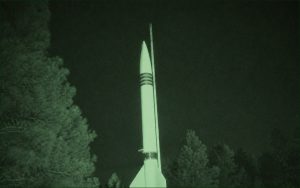
That is why the team keeps returning to the same airspace rather than treating every launch as an isolated event. The Triangle offers continuity in an investigation filled with unpredictable observations, allowing each new experiment to be measured against what came before it. Its repeated use does not prove that something hidden occupies the sky above the property, nor does it establish that rockets are activating an unknown phenomenon. What it shows is that the researchers believe this location gives them the best opportunity to test whether earlier patterns can be reproduced. Until those patterns receive a clear and independently supported explanation, the Triangle will remain both a practical laboratory and an unresolved part of the larger mystery. Each rocket rises with a precise destination, but the meaning of what happens around it is still very much open.
