
For years, Oak Island has returned to one of its most fascinating and debated possibilities: could the island’s long-running mystery have some connection to the Knights Templar? The idea has never been presented as a settled answer, but it remains one of the show’s most cinematic threads, linking strange artifacts, old-world symbolism, and the Lagina team’s search for meaning beneath the soil of Nova Scotia. Among the clues often discussed are the lead cross found at Smith’s Cove, stone carvings, and theories suggesting that medieval knowledge or treasure routes may have reached farther than history usually allows. The History Channel’s own Oak Island materials describe the lead cross as one of the island’s major finds and note that testing connected its material to Southern France and the 1300s or 1400s. Still, the bigger question remains open: is this a meaningful trail, or another compelling piece of a much larger puzzle?
A Medieval Shadow Over a Nova Scotia Mystery
The Knights Templar connection has appeared across *The Curse of Oak Island* as one of the show’s most enduring theories, often surfacing when the team examines artifacts that seem older or more unusual than expected. Rick and Marty Lagina, along with metal-detection expert Gary Drayton and other specialists, have repeatedly looked at finds through both archaeological and historical lenses. The most recognisable object in this discussion is the lead cross discovered at Smith’s Cove, a small but visually striking artifact that immediately invited questions about age, origin, and possible symbolism. According to History’s interactive Oak Island map, the cross is considered one of the island’s biggest finds, with testing linking the lead to Southern France and dating it to the 1300s or 1400s. That does not mean the Templars were on Oak Island, but it explains why the object became such a powerful part of the show’s wider investigation.
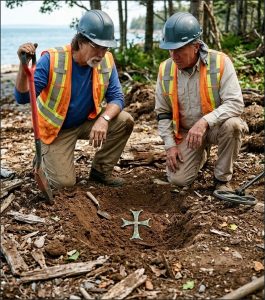
The theory has also been explored through carvings, cross-like shapes, and the possibility that certain European groups may have travelled or transferred knowledge across the Atlantic before the better-known colonial period. History’s list of top Oak Island theories includes the idea that some stone carvings may have been made by Templars who came from Portugal and possibly hid treasure on the island, though that remains framed as a theory rather than a verified account. The programme has used these clues not as simple answers, but as pieces in a broader pattern that the team continues to test, debate, and revisit. For newer viewers, this is why the Templar thread can feel so dramatic: it brings medieval Europe into a mystery usually associated with pits, tunnels, flood systems, and buried objects. For longtime followers, it is familiar territory, but still one of the show’s richest sources of speculation.
Why the Templar Link Still Sparks Debate
The reason this theory keeps drawing attention is not simply because the Knights Templar sound mysterious. It is because the idea connects several parts of Oak Island’s puzzle into one larger historical question: could the island have been used for something more complex than a local treasure deposit? The lead cross may suggest an old-world connection, while the man-made structures around Smith’s Cove and the long-discussed Money Pit raise questions about planning, labour, and purpose. None of these details has confirmed a Templar presence, and the show has not delivered a final answer. But together, they create a storyline where each artifact appears to raise questions about who might have reached the island, when they arrived, and why they would have chosen such a difficult place to work.
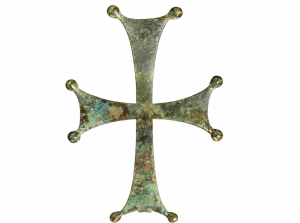
The Templar theory also matters because it sits between history and legend, which is exactly where Oak Island often becomes most interesting. The team wondered whether some discoveries could point to European activity that is older or more unusual than expected, while people interested in the mystery have speculated about religious orders, hidden manuscripts, sacred relics, or treasure moved during times of political danger. These ideas remain unconfirmed, but they give the investigation a wider frame than gold alone. History has even highlighted Templar-themed Oak Island programming, including Tales from Oak Island: Trail of the Templar Cross, which focuses on the lead cross as a major clue in the island’s story. That continued attention shows why the subject has not faded: it offers a possible bridge between physical evidence and the kind of historical mystery that keeps audiences debating long after an episode ends.
An Unanswered Trail That Keeps Oak Island Alive
What makes the Knights Templar angle valuable to the show is not that it gives viewers a neat solution, but that it keeps the investigation open in a meaningful way. Oak Island has always depended on tension between evidence and interpretation, and the Templar theory fits that structure perfectly. A lead cross, a carved stone, or an unusual structure can be real, while the explanation behind it can still remain uncertain. That separation is important because it prevents the story from becoming misleading. The artifact may be intriguing, but the leap from “old European object” to “Templar activity on the island” still requires far more support than the show has publicly established.

This is why the theory continues to work as entertainment analysis rather than a claim of historical certainty. It gives the series a sense of depth, linking the search to medieval Europe, maritime routes, and the possibility that Oak Island may have been touched by people with motives still hidden from view. At the same time, the strongest version of the story is the cautious one: the clues may suggest a connection, but they do not settle the case. For readers and viewers following the investigation, that uncertainty is part of the appeal. Until more evidence is found and tested, the Knights Templar link remains one of Oak Island’s most compelling open questions — not an answer, but a trail still disappearing into the dark.
