
As the season moves closer to its final stretch, one thread continues to cast a long shadow over Oak Island: the possibility that some of its clues may point toward a medieval past. The idea does not claim that knights, religious orders, or European travelers left a proven treasure behind. Instead, it asks whether certain artifacts, symbols, old theories, and unusual discoveries could belong to a wider historical story that began long before the island became famous. Rick and Marty Lagina, along with researchers and specialists, have often followed evidence that seems to pull the investigation beyond the familiar Money Pit legend. That is why the medieval trail remains so compelling. It sits between history and speculation, between physical clues and unanswered questions, giving the mystery a deeper atmosphere without offering a final conclusion.
A Clue Path That Leads Beyond the Money Pit
The medieval angle has appeared across the island investigation whenever the team has examined clues that seem older, stranger, or more difficult to place within the usual treasure-hunt timeline. Over the years, Rick and Marty Lagina have worked with metal-detecting experts, archaeologists, historians, and researchers to study items found in areas such as the Money Pit, the swamp, and Lot 5. These locations do not always tell the same story, which is part of what keeps the investigation alive. Some discoveries appear connected to later colonial activity, while others have encouraged the team to look further back into European history. The medieval thread enters when an object, structure, or theory seems to raise questions about who may have visited the island before the well-known search began.
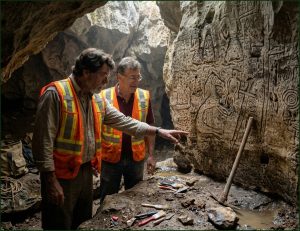
For new viewers, the idea can feel complicated because Oak Island is not built around one single theory. The island has been linked in different discussions to pirates, military activity, early settlers, Spanish or Portuguese movement, and possible medieval influences. The medieval trail is especially interesting because it suggests that the island’s story may not begin with treasure hunters digging into the Money Pit. It could point to an earlier layer of activity, though that has not been confirmed. The team has wondered whether certain clues might fit into a much older Atlantic world of sailors, symbols, and hidden knowledge. That does not make the theory true, but it explains why it continues to attract attention.
What gives this thread its dramatic pull is the way it connects physical investigation with historical imagination. A small artifact in the ground can feel ordinary until it is placed beside a theory involving medieval Europe, religious orders, or long-distance navigation. A stone feature, a shaped piece of metal, or an unusual pattern can suddenly become part of a much larger question. Was the item brought by later settlers, lost by workers, or connected to something older? Could it reflect trade, travel, or stories passed down through generations? The show’s most interesting moments often happen in that uncertain space, where the evidence is real but its meaning remains open.
Why Medieval Hints Keep Sparks Flying
The medieval theory continues to stand out because it gives Oak Island a sense of scale that reaches far beyond Nova Scotia. If the island’s mystery only involved buried valuables, the story would be simpler and perhaps less haunting. But when the investigation touches on possible medieval links, it starts to ask bigger questions about movement across the Atlantic, the transfer of knowledge, and the way history can disappear beneath later events. The idea may suggest that the island is not just a place where something was hidden, but a place where different historical layers may have crossed. That possibility is what makes the thread so powerful. It opens the door to a mystery about purpose, not just location.
The Knights Templar-style theories are a major reason this angle continues to spark debate. These theories often imagine that medieval groups may have carried secrets, relics, maps, or knowledge across oceans or through hidden networks. In the context of Oak Island, such ideas are usually discussed as possibilities, not settled facts. The team has explored whether certain clues could point to older European connections, while fans have speculated about symbols, timelines, and possible links to groups from the medieval world. Still, no responsible reading should treat these theories as proven. The most accurate way to frame them is that they appear to raise questions about whether the island’s past could be more complex than the standard treasure legend suggests.
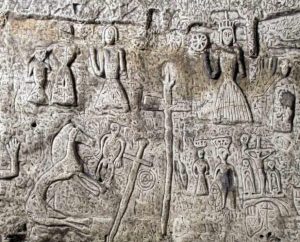
What makes the medieval trail different from other theories is its emotional texture. Pirate stories feel adventurous, colonial theories feel practical, and military explanations feel grounded in strategy. Medieval theories feel darker, older, and more symbolic, which naturally gives them a cinematic quality. They bring to mind coded stones, secret routes, religious conflict, and knowledge guarded across generations. That atmosphere can be fascinating, but it also makes careful language essential. A theory can be captivating without being treated as a verified historical account.
The real value of this angle is not that it delivers an answer, but that it forces viewers to think about evidence differently. A clue does not need to be treasure to matter. It may matter because it helps place activity on the island within a timeline, or because it challenges assumptions about when people arrived there. If an object appears older than expected, the next question is not automatically “who hid the treasure?” but “how did this object get here?” That is a more careful and more interesting question. It keeps the investigation grounded while still allowing the mystery to breathe.
This is also why the medieval thread keeps returning near the end of the season. As the final episodes approach, audiences naturally look for patterns that connect the season’s discoveries into something larger. A single find may not be enough to support a full theory, but several clues can create a sense that the island is holding back a deeper story. The team may look at artifacts, locations, and expert opinions, trying to decide whether the medieval idea is gaining shape or simply remaining one of many possibilities. That tension is central to the show’s appeal. It allows the mystery to feel active without pretending the case has been closed.
The Unanswered Thread That Still Refuses to Fade
The medieval trail matters because it gives Oak Island one of its most enduring questions: is the island’s mystery about treasure, or is it about history? For many longtime followers, the answer may be somewhere between the two. The search began with a legend of something buried, but the investigation has grown into a much wider examination of who may have visited the island and why. Medieval hints make that question feel older and more complicated. They suggest that the island could be part of a broader Atlantic story, though that remains unconfirmed. The result is a mystery that feels less like a single locked chest and more like a buried archive.
At the same time, the medieval theory must remain open because the evidence has not delivered a final answer. An artifact can raise questions without identifying its original owner. A symbol can invite interpretation without proving intent. A location can feel significant without establishing a complete historical chain. That is why the best version of this story avoids overstatement. The clues may point to older possibilities, but the connection between Oak Island and medieval groups has not been confirmed.

That uncertainty is not a weakness of the topic; it is the reason the topic still works. If everything were already settled, there would be little left to debate. Instead, the medieval trail keeps audiences returning because it feels close enough to history to be taken seriously, yet distant enough to remain mysterious. It allows the investigation to move through tunnels, lots, maps, and artifacts with a sense that every clue could belong to a bigger pattern. Whether that pattern leads to medieval visitors, later European activity, or something more ordinary remains unclear. The unanswered nature of the thread is what keeps it alive.
As the season drifts toward its ending, the medieval question may become one of the most important threads still hanging in the air. It does not need to solve the island’s mystery to remain valuable. It only needs to keep asking the right questions: who knew about this place, what were they doing there, and why do certain clues seem to echo a much older world? Those questions are enough to keep the island’s atmosphere heavy with possibility. Until stronger evidence emerges, the medieval trail remains a fascinating path through the fog, still unfinished, still debated, and still waiting beneath the surface.
