
The mesa has become one of the most watched areas on Skinwalker Ranch, not because it gives up answers easily, but because it keeps pulling the investigation back underground. In the latest drilling operation, the team focused on a new 24-inch vertical borehole placed near a previous drilling site where equipment reportedly struck something extremely hard. The plan was cautious but ambitious: drill down toward the depth range where earlier work had suggested the best chance of intersecting an area connected to unusual buried material. At the time described in the transcript, the borehole had already reached 53 feet, with the most important stretch expected between roughly 55 and 85 feet. The operation did not promise a final answer, but it carried the feeling of a carefully planned return to one of the ranch’s most stubborn underground questions.
A New Borehole Near an Old Problem
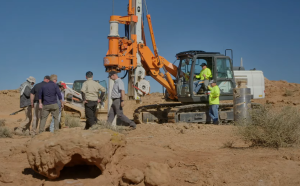
The drilling operation centered on the mesa, where the team had returned with a large rig capable of creating a 24-inch diameter vertical borehole. This was not a random location or a casual attempt to dig deeper. According to the provided transcript, the new borehole was placed several feet south of the area where a previous lateral drill was destroyed after striking something hard in borehole two. That earlier incident remained important because it suggested the team had encountered an underground obstruction they could not easily explain at the time. The new drilling effort appeared designed to approach that same zone from a different angle. Rather than repeating the same failed path, the team used a vertical borehole to reach the target area more directly.
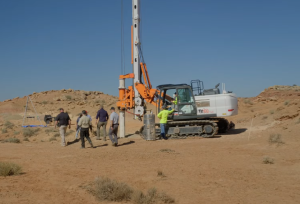
At the moment described in the transcript, the drilling team had reached 53 feet deep. That number mattered because the team believed the next 30 feet offered the strongest chance of intersecting with borehole two. The expected window was roughly between 55 and 85 feet, placing the most important part of the operation just ahead of them. The rig could reach a maximum depth of 90 feet, which created a narrow but meaningful opportunity to test the target zone. For viewers who may not follow every technical detail, the strategy was fairly clear: reach the depth where past evidence and past difficulty appeared to overlap. That made each additional foot feel less like routine drilling and more like a controlled attempt to revisit an unresolved underground clue.
The operation also carried extra weight because of earlier discoveries in the same general area. The transcript mentions ceramic-like material that had been recovered near the zone where the previous drill was damaged. That material had already raised interest, but one earlier vertical hole drilled in the area did not produce the same result. This new borehole therefore came with both hope and uncertainty. The team was not starting from nothing, but they also did not have a guarantee that the target would appear again. That tension is what made the drilling operation compelling: the search was guided by previous clues, but the ground still had every chance to disappoint them.
Why the 90-Foot Borehole Matters to the Mesa Mystery
The 90-foot limit gave the drilling operation a dramatic boundary. The team could not simply keep going forever, hoping the answer would eventually appear. They had a defined depth, a known target range, and a limited window in which the borehole might intersect the area connected to earlier drilling problems. That kind of limitation is important because it turns the operation into a focused test rather than an open-ended excavation. If the team found ceramic-like material or struck another unusual obstruction, the result could point to a specific underground layer worth studying further. If nothing appeared, that outcome would matter too, because it would narrow the search area and force the investigation to adjust.
The location also matters because the mesa has become one of the ranch’s most debated physical features. Many unusual moments connected to the ranch involve things that are difficult to hold onto: signals, aerial observations, sensor readings, and sudden equipment behavior. A borehole is different because it reaches into the landscape itself. It offers a way to ask whether something physical beneath the mesa could be connected to the larger pattern of unanswered questions. That does not mean the team has established such a connection. It simply means the drilling operation created a rare opportunity to test whether the mystery has a material side hidden below the surface.
The possibility of intersecting borehole two made the operation even more intriguing. If the new vertical borehole reached the same zone where earlier equipment encountered resistance, investigators could compare what they found with the previous incident. They might recover samples, examine the surrounding material, or determine whether the obstruction was natural rock, buried debris, or something else entirely. Any of those possibilities would be useful, even if the explanation turned out to be ordinary. The most valuable investigations do not only chase the most mysterious answer; they also remove weaker explanations through careful testing. In that sense, the drilling operation stood out because it had the potential to turn a dramatic past failure into a more structured scientific question.
A Careful Search Beneath a Reluctant Landscape
What makes the mesa drilling operation important is not that it delivers an easy conclusion. Its value comes from the way it forces the investigation to become more precise. Instead of asking broad questions about what might be beneath the mesa, the team focused on a specific borehole, a specific depth range, and a specific area linked to previous drilling trouble. That kind of approach is less flashy than speculation, but it is far more useful. It allows the team to compare results, preserve samples, and decide whether a pattern is forming. For people interested in the ranch mystery, this is where the search becomes more grounded.
Still, the operation remains open to several interpretations. The hard object that damaged earlier equipment may have a natural explanation, such as dense rock or a difficult underground formation. The ceramic-like material could also turn out to have a conventional source once studied more closely. At the same time, the fact that the team returned to the area with a larger vertical borehole suggests they believed the location deserved further attention. That does not turn a theory into fact, but it does show why the mesa continues to pull researchers back. The most responsible reading is that the drilling operation raised useful questions without answering them completely.
In the end, the latest borehole matters because it represents a disciplined attempt to revisit one of the ranch’s most puzzling underground moments. The team knew where previous drilling had run into trouble, understood the depth range they wanted to test, and brought equipment capable of reaching close to that target. Whether the borehole eventually produces more ceramic-like material, another obstruction, or a more ordinary explanation, the operation helps define the next stage of the investigation. The mesa remains a difficult and reluctant landscape, offering clues only in fragments and setbacks. That is exactly why the drilling continues to hold attention. The mystery has not been solved, but the search beneath the mesa has become sharper, deeper, and harder to ignore.
