
At Skinwalker Ranch, few ideas are more intriguing than the possibility of an invisible “bubble” above the property. It is not a confirmed structure, and it should not be treated as one. Instead, the bubble is best understood as a working theory built around unusual readings, repeated aerial tests, and moments when instruments appear to behave differently in a specific zone. Rocket experiments have become especially important to that question because they can move quickly through vertical space while the team watches with multiple sensors. Unlike a drone, which can hover and observe, a rocket creates a sharp, timed event that can be compared against GPS, signal data, camera footage, and other measurements. The mystery is not whether the rocket solved the case. The real question is what the data may suggest about the strange region the team keeps returning to.
The Rocket Test Focused on the Suspected Bubble
The suspected bubble became important because the ranch investigation has often pointed attention toward a zone above the property rather than only toward the ground. In many experiments, the team has treated the airspace as something worth testing, not just watching. That is where rocket launches become valuable, especially when researchers want to send a physical object through a specific vertical path. A rocket does not simply observe the area from a safe distance. It passes through the target zone, giving the team a timed event that can be measured before, during, and after launch.
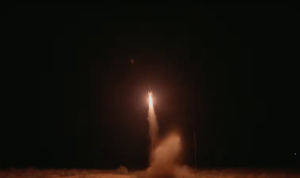
The word “bubble” should be understood carefully because it describes a theory, not a confirmed object. It suggests the possibility of a region where signals, tracking systems, or other instruments may behave differently than expected. That kind of idea is naturally fascinating, but it needs evidence from repeated tests before anyone can treat it as more than a working explanation. Rocket data matters because it can help the team look for patterns around altitude, direction, timing, and location. If strange readings appear only when rockets pass near the same area, the team has a reason to study that zone more closely.
This is also why rocket experiments are different from ordinary skywatching. When people simply look upward, unusual events can be difficult to place, measure, or repeat. A rocket gives investigators something specific to track, which makes the experiment more structured. The launch time, flight path, and expected movement can all be compared with instrument behavior. If a signal changes, a GPS reading shifts, or visual tracking becomes unusual, the team can ask whether the change happened near the suspected bubble. That does not prove the bubble exists, but it turns a broad mystery into a more focused scientific question.
What the Rocket Data May Suggest About the Airspace
Rocket data becomes interesting when different instruments appear to tell a complicated story at the same time. A single odd reading can be dismissed more easily, especially in a field where weather, interference, equipment limits, and human interpretation can all play a role. But when a rocket passes through a target area and multiple systems show unusual behavior, the moment becomes harder to ignore. The key is not to jump to the most dramatic theory. The more useful approach is to ask whether the same kind of response appears again under similar conditions.
The suspected bubble theory gains attention because it may help explain why certain anomalies seem to cluster around one part of the sky. If rocket data shows an unexpected change near that zone, it could point to something environmental, electromagnetic, atmospheric, or technical that the team has not fully identified. It may also turn out to have a simpler explanation after review, which is why the data must be treated cautiously. The important part is that the rocket creates a clear test point. It allows the team to compare what happened inside, outside, and around the suspected area.
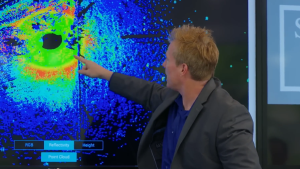
For viewers, this is where the experiment becomes more valuable than a simple launch sequence. The drama is not only in the rocket leaving the ground. It is in the question of whether the data behaves differently as the rocket moves through the airspace that has already raised concern. If the rocket’s path appears normal, that result still helps define the boundary of the mystery. If the readings become strange at a particular point, the team has a reason to return with new instruments or a revised experiment. Either outcome helps sharpen the investigation rather than relying on speculation alone.
The suspected bubble also connects the rocket tests to larger questions about the ranch. The mesa, the triangle area, aerial observations, signal spikes, and unusual tracking moments often feel like separate threads. A bubble theory may suggest that some of those threads are connected by locatio altitude, though that remains unclear. Rocket data could help test whether the airspace itself is part of the pattern. That is why the experiment matters even without a final answer. It gives the team a way to ask whether the mystery is not only beneath the ground, but also suspended somewhere above it.
Why the Bubble Question Still Matters
The bubble question matters because it offers one of the clearest examples of how the ranch mystery keeps shifting between visible and invisible evidence. A buried object can be drilled toward, a fragment can be examined, and a signal can be recorded. But a suspected region in the air is much harder to prove, define, or dismiss. That makes rocket data especially useful because it gives the team a moving probe through an area that cannot be touched directly. If the suspected bubble is real in any measurable sense, the data should eventually show patterns that can be tested again.
At the same time, the mystery remains wide open. The rocket data may suggest unusual behavior near the suspected bubble, but it does not automatically identify what caused it. The readings could be connected to equipment limits, environmental conditions, signal interference, or something else the team has not yet understood. That uncertainty is not a weakness if the investigation treats it honestly. In fact, it is what makes the question worth following. The best discoveries often begin as unresolved patterns that demand better tests.
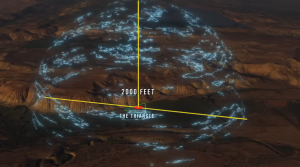
What makes the rocket experiments so compelling is that they push the investigation beyond passive observation. Instead of waiting for something strange to happen, the team creates a controlled event and watches the ranch respond. The suspected bubble gives that event a target, a reason, and a deeper question. Does the sky above the ranch contain a zone where data behaves differently, or are the anomalies the result of unrelated events that only appear connected? That has not been confirmed either way.
For now, the suspected bubble remains a theory shaped by data, repetition, and careful curiosity. The rocket experiments do not close the case, but they may help define where the next search should begin. If future launches continue to show unusual results near the same area, the team will have stronger reasons to keep testing that part of the sky. If the pattern disappears, that would also be useful because it would challenge the theory and force a new direction. Either way, the rocket data gives the investigation something more valuable than a dramatic moment. It gives the mystery a sharper outline, even if the center remains unexplained.
