
Expedition Unknown descends beneath the shattered streets of the “Polish Pompeii,” where a collapsed cellar hides a forgotten underground world untouched since the final days of World War II. As Josh Gates uncovers abandoned communications equipment and burned wartime records, one discovery suggests this ruined city concealed far more than a last stand—it may have protected one of Nazi Germany’s most critical command centers.
The City That Vanished… But Never Surrendered Its Secrets
When the Battle of Berlin drew near in 1945, Kostrzyn became one of the Third Reich’s final defensive strongholds. The Soviet assault left almost nothing standing, reducing the medieval city to ruins and earning it the haunting nickname “The Polish Pompeii.” Above ground, only broken walls and empty streets survived. Beneath the rubble, however, history remained frozen in silence.
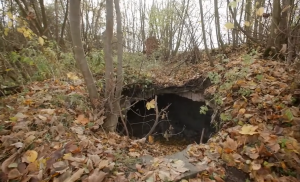
Determined to uncover what the destruction had concealed, Expedition Unknown follows Josh Gates as he joins Polish researchers Jarek and Paweł to investigate forgotten underground chambers hidden beneath the devastated town. What begins as a search for wartime remains quickly evolves into a journey beneath layers of collapsed medieval architecture, where sealed passageways hint that an entire network escaped both the bombs and the decades that followed. Every buried entrance raises the same unsettling question: what was important enough to disappear beneath an entire city?
A Sealed Underground Complex Preserved the Final Hours of War
After clearing tons of debris from a collapsed cellar, the team finally reaches an underground complex unlike anything visible on the surface. The rooms appear astonishingly well preserved, as though the people working there abandoned them only moments before Soviet forces arrived. Military equipment still occupies its original positions, while electrical power systems, radio components, gas masks, and personal belongings remain scattered throughout the chambers.
The deeper the investigation moves, the clearer the site’s purpose becomes. This was not an ordinary bunker built for protection. The sophisticated communications infrastructure suggests the underground facility functioned as an operational command center responsible for coordinating military activity during the desperate final defense of the Eastern Front.
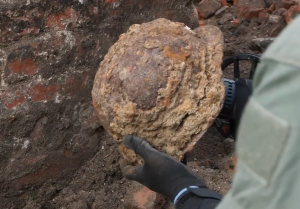
Then the most remarkable discovery emerges from the ashes. Hidden among the debris are partially burned wartime documents believed to be connected with Enigma-encrypted communications. Although damaged by fire, surviving references mention equipment deliveries and prisoner transfers associated with a nearby prison camp. Together, the documents and communications equipment reveal an extraordinary archaeological snapshot of a command network operating while Nazi Germany stood on the brink of collapse.
The Burned Enigma Records Reveal History’s Final Transmission
For archaeologists, abandoned machinery tells only part of the story. Documents reveal decisions, priorities, and the people caught inside history’s most dangerous moments. The burned records recovered beneath Kostrzyn suggest that military logistics and prisoner movements continued flowing through this underground communications center until the very final stage of the war.
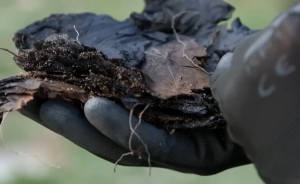
The discovery dramatically strengthens the conclusion that the hidden complex played a critical role during Germany’s last defensive operations. Combined with the preserved radio systems, electrical infrastructure, and command facilities, the evidence transforms a forgotten cellar into one of the clearest archaeological records of Nazi communications ever recovered from the closing months of the conflict.
For Expedition Unknown, the greatest revelation is not the bunker itself, but the human story sealed inside it. Every abandoned gas mask, every silent radio, and every scorched page reflects the frantic effort to maintain control as an empire collapsed above ground. Decades after the guns fell silent, the underground complex continues preserving the final echoes of one of history’s darkest chapters. Beneath the ruins of the Polish Pompeii, archaeology has uncovered more than a forgotten command post—it has recovered a remarkable witness to the last days of the Third Reich, where history remained buried until the stones were finally moved aside.
