
Josh Gates Faces Deadly Minefields in Cambodia during a tense search for a long-forgotten temple, where local legends, buried history, and the deadly legacy of past conflicts turn an archaeological investigation into a high-stakes journey for survival.
Josh Gates Faces Deadly Minefields in Cambodia on the Trail of a Lost Temple
Josh Gates Faces Deadly Minefields in Cambodia in one of the most tense and dangerous investigations of his career, as a search for a forgotten temple leads deep into a landscape shaped by memory, conflict, and hidden danger. On paper, the mission may have seemed straightforward: follow reports of an abandoned religious site in Cambodia’s countryside, listen to the local legends, and see whether the ruins could reveal a chapter of history that had been lost to time. In reality, the expedition became something far more unsettling the moment the team arrived.

That is what makes the story so powerful. A lost temple is the kind of mystery that naturally draws curiosity. It promises history, architecture, and the possibility of recovering something sacred that has been swallowed by the earth. But Cambodia is not just another archaeological setting. It is a place where the past is still visible in the land itself, where years of violence and upheaval left scars that cannot always be seen until someone steps too far in the wrong direction. That hidden danger transformed the expedition from a search for clues into a reminder that history can still kill long after the fighting ends.
What gives Josh Gates Faces Deadly Minefields in Cambodia its emotional force is the tension between wonder and fear. Gates has built his career on moving toward mystery with calm determination, but here the excitement of discovery is shadowed by a very real sense of risk. The temple may be lost, but the path to it is not empty. Every step forward carries the possibility of uncovering not only ancient history, but the violent residue of a much more recent past.
The Forgotten Temple Search Becomes a Race Against a Deadly Legacy
The most gripping part of the Cambodia expedition is the way the landscape itself becomes part of the story. What began as a search for a temple quickly turns into a race against a deadly legacy left behind by years of conflict. Minefields do not announce themselves. They wait quietly, hidden beneath grass, dirt, and time. That makes every movement on the ground feel heavier, every decision more serious, and every moment of progress more fragile.
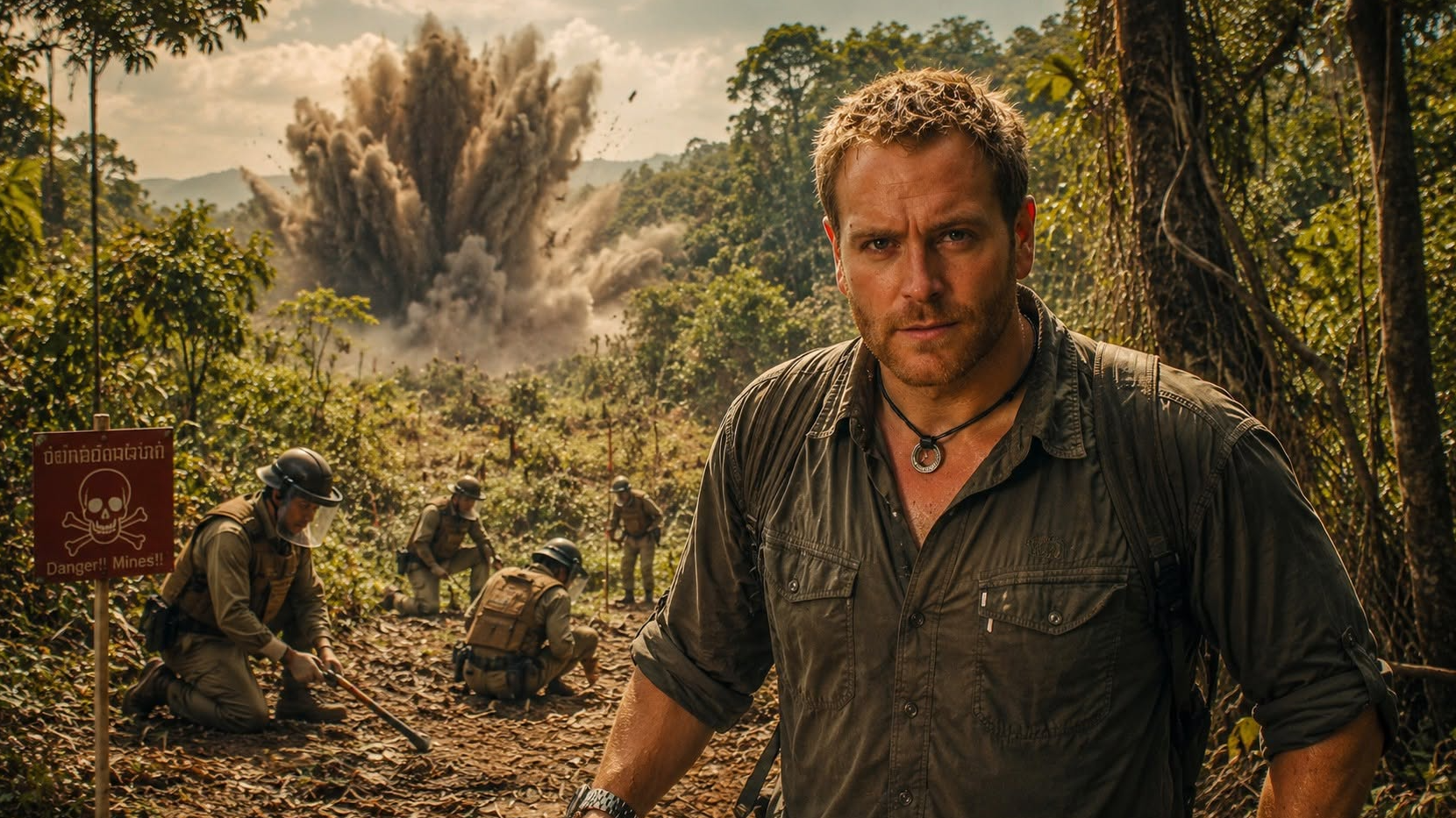
For Gates and his crew, that reality adds a layer of intensity that goes far beyond ordinary adventure television. This is not simply a matter of getting from one site to another. It is about navigating a place where the land still remembers war even when the people around it are trying to move forward. That contrast gives the story a haunting weight. The temple may represent a lost world of faith and devotion, but the path to it is marked by destruction, caution, and silence.
That is why Josh Gates Faces Deadly Minefields in Cambodia resonates so strongly. It shows how an expedition can become bigger than the object being sought. The crew is not just chasing a structure hidden in the countryside. They are moving through a landscape where history is layered, where every landmark may carry more pain than beauty, and where the search for truth is inseparable from the risk of never making it back. The danger is not abstract. It is present in the ground itself, and that makes the mission feel deeply human.
Why the Cambodia Expedition Stays With Viewers Long After the Search Ends
The reason this story lingers is because it captures one of the most powerful truths about exploration: discovery is never free of consequence. Josh Gates Faces Deadly Minefields in Cambodia is not just a dramatic headline. It is a reminder that the places we call mysterious are often also wounded, and that uncovering hidden history can mean walking directly through the scars left by the people who lived there before. That gives the expedition emotional depth that goes beyond the search for a lost temple.

Josh Gates has always been compelling because he brings both curiosity and empathy to the unknown. He does not treat a site like a puzzle without context. He treats it like a place shaped by real people, real suffering, and real memory. In Cambodia, that approach matters even more. A lost temple is not only an architectural mystery. It is also a symbol of what endured, what was abandoned, and what the land has kept hidden through decades of upheaval. That kind of story stays with people because it feels bigger than the episode itself.
In the end, Josh Gates Faces Deadly Minefields in Cambodia works because it combines suspense, history, and emotional truth in one unforgettable journey. The temple may be lost, but the danger is real, and the legacy of the past is still waiting beneath the surface. That is what makes the story so powerful. It is not only about finding something ancient. It is about surviving long enough to understand what was lost, and why it still matters.
