
Oak Island has long been surrounded by stories of tunnels, strange artifacts, old stonework, and the possibility that someone reached its shores long before the modern treasure hunt began. Among the theories that continues to draw attention is a possible connection between the island and Viking-era activity in the North Atlantic. The idea is not that Viking ruins have been found on Oak Island, nor that the island’s central mystery has been answered. Instead, the theory looks at whether Norse exploration, medieval travel routes, or later European groups may have left traces that echo through the island’s puzzle. With an officially recognized Norse site at L’Anse aux Meadows in Newfoundland, the broader historical backdrop is real, even if the Oak Island link remains uncertain. That balance between fact and possibility is exactly what makes the theory worth examining.
A Northern Clue Enters the Oak Island Investigation
The Viking connection appears within the Oak Island investigation as part of a wider search for who may have been active on the island before its famous treasure story took shape. Rick and Marty Lagina, along with researchers, archaeologists, and other specialists, have often looked beyond the most familiar versions of the legend to ask whether older layers of history may be involved. In that setting, Viking-era activity becomes less of a direct claim and more of a historical doorway. The team has considered clues from lots, artifacts, shoreline features, and theories about early visitors who may have known the Atlantic coast in ways later generations forgot. For new viewers, the question is simple: could the island’s mystery belong to a much larger story of movement across the North Atlantic?
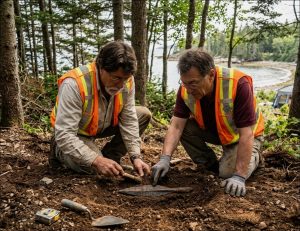
The strongest piece of real-world context comes not from Oak Island itself, but from L’Anse aux Meadows, located in Newfoundland. UNESCO identifies the site as the remains of an 11th-century Viking settlement, and Parks Canada describes it as a Norse encampment discovered through archaeological work beginning in the 1960s. That matters because it places Norse travelers in North America centuries before many of the later European stories usually linked to the continent. It does not place them on Oak Island, and the distinction is important. Still, it gives the theory a grounded starting point: Viking activity in the region is part of documented history, while a direct Oak Island connection remains an open question.
In the series’ wider discussion of medieval possibilities, the Viking idea has sometimes appeared near other theories involving early European movement, religious orders, and lost knowledge. A 2024 report on the show’s Viking theory noted that the Lagina team explored whether Norse travelers might have played some role in a larger chain of events tied to later groups associated with Oak Island speculation. That type of theory is naturally dramatic, but it also requires caution. A possible connection between Vikings, medieval Europe, and Oak Island is not the same as evidence that one group built the island’s underground features. The more responsible way to read the idea is as a question about contact, influence, and timing, not as a finished answer.
Why the Viking Theory Still Sparks Debate
The theory stands out because it places Oak Island inside a wider Atlantic world rather than treating it as an isolated patch of land off Nova Scotia. Norse sailors were capable of crossing dangerous seas, reaching remote coastlines, and establishing temporary bases far from their homelands. Research published in 2021 used tree-ring evidence to date Norse activity at L’Anse aux Meadows to A.D. 1021, giving the Newfoundland site a strikingly precise place in history. That date does not prove anything about Oak Island, but it shows that long-distance travel across the North Atlantic was not only possible, it happened. For people interested in the mystery, that single fact makes the Viking question difficult to dismiss completely.
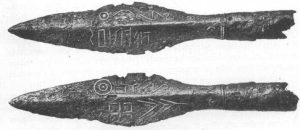
What makes the theory especially compelling is the space between what is known and what remains unclear. If Norse travelers reached Newfoundland, it may suggest that nearby coastlines, resources, or routes were at least within the wider range of exploration. However, “may suggest” is not the same as “demonstrates,” and the Oak Island evidence has not established a Viking presence on the island. The team wondered whether certain historical patterns could point to older travel networks, while fans have speculated about links between Norse explorers and later medieval traditions. Those ideas create an intriguing frame for the mystery, but they remain speculative until stronger evidence appears.
The theory also raises an important question about how history can become layered over time. Oak Island may have seen different types of activity in different periods, and not every feature or artifact has to belong to one single story. A Viking link could point to an early chapter, while other clues could belong to later European visitors, colonial activity, or unrelated local use. That possibility makes the investigation more complicated, not simpler. Instead of offering one neat answer, the Viking theory asks whether Oak Island’s hidden past might be a patchwork of separate events that later became tangled into one enduring legend.
A Mystery Still Waiting Beneath the Surface
The possible connection between Oak Island and Viking ruins remains important because it gives the mystery a deeper historical horizon. L’Anse aux Meadows shows that Norse presence in North America is not merely folklore, but Oak Island sits in a different category. No accepted Viking ruin has been established on the island, and no single object has settled the debate. That is why the theory works best when treated as a lens rather than a conclusion. It encourages viewers to think about navigation, memory, coastlines, and the way old stories can travel farther than the people who first carried them.

For the investigation, the Viking angle also highlights the challenge of separating evidence from atmosphere. A weathered object, a carved stone, or an unusual structure can feel meaningful, especially when placed beside a dramatic historical theory. Yet responsible analysis has to ask where the object was found, how it was dated, who examined it, and whether other explanations remain possible. That careful process may not be as instantly thrilling as a bold claim, but it is what keeps the mystery credible. Oak Island is most interesting when the clues are allowed to remain complicated.
In the end, the Viking theory does not solve Oak Island, and it should not be presented as if it does. What it does offer is a fascinating possibility: that the island’s story may brush against a much older Atlantic past than many viewers first imagined. The connection could point to questions about medieval travel, inherited knowledge, or forgotten coastal movement, but those questions still need evidence. Until that evidence arrives, the theory remains one of the island’s most intriguing open doors. It is a shadow on the edge of the map, inviting debate without allowing the final page to be written.
