
Oak Island has never been only about gold. Beneath its mud, swamp water, stones, and broken shafts, the island has always carried another kind of treasure: the possibility that history itself may have been hidden there. And few theories capture that darker, stranger possibility more than the Mercy Point idea, a theory that pulls Oak Island away from simple treasure hunting and back into the shadow of Shakespeare, secret symbols, and documents that could change everything.
The Point That Refuses to Stay Buried
The Mercy Point theory begins with a belief that Oak Island may not be random at all. To some researchers, the island’s most important places may form part of a hidden design, a symbolic map written not in ink, but in stone, water, and land. Within that idea, Mercy Point becomes more than a location. It becomes a possible key.
That is what makes the theory so unsettling. Oak Island has always produced clues that seem to resist simple explanation. A stone formation here, a strange alignment there, a swamp that may not be entirely natural, and buried features that keep pulling the search in different directions. Most treasure hunts follow objects. This theory follows patterns.
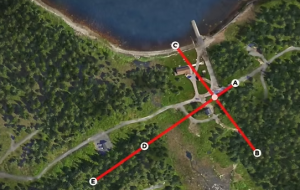
Petter Amundsen’s interpretation suggests that certain points on Oak Island could correspond to the Tree of Life, an ancient symbolic structure often connected to hidden knowledge, spiritual meaning, and coded design. In that framework, Mercy Point is not just another spot on the island. It may represent a marker, a position, or a doorway in a larger symbolic system.
But theories like this are dangerous because they do not offer easy proof. They invite the team and the fans to look at the island differently. Not as a place where someone simply buried treasure, but as a landscape that may have been arranged to protect something far more fragile than gold.
When Shakespeare Enters the Oak Island Mystery
The most fascinating part of the Mercy Point theory is where it leads. If the island was shaped by symbols, and if those symbols were meant to guide someone toward a hidden vault, then the question becomes almost impossible to ignore: what was so important that it needed to be concealed this way? That is where the Shakespeare mystery enters the story.
One version of the theory suggests that Oak Island could be connected to lost Shakespearean manuscripts, hidden folios, or documents tied to secret intellectual or spiritual movements. This is not a proven claim. It is a theory, and one that remains highly debated. But it has survived because Oak Island has always lived in the space between evidence and impossibility.
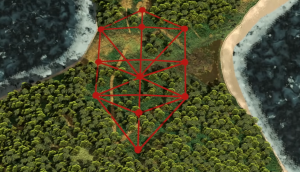
The idea is not simply that treasure may be buried underground. The idea is that written history may be buried there. Manuscripts. Records. Hidden knowledge. Documents that could reveal a story different from the one the world has accepted. To some fans, that possibility is even more explosive than a chest full of coins.
A gold discovery would be valuable. But a lost manuscript, a sealed archive, or a document tied to Shakespeare or Rosicrucian thought would be something else entirely. It would turn Oak Island from a treasure site into a historical detonation point.
And that is why Mercy Point continues to fascinate. It suggests that the real prize may not be metal. It may be meaning.
Why the Theory Still Haunts the Search
The Mercy Point theory remains controversial because it depends on interpretation, alignment, and symbolic connection. It cannot be treated like a coin pulled from the ground or a beam tested in a lab. It asks viewers to believe that the island may contain an intentional design, and that the design may still be readable after centuries of damage, flooding, excavation, and erosion. That makes it risky. But it also makes it powerful.
Oak Island has always punished certainty. Every confident explanation eventually meets another clue that refuses to fit. The Money Pit, the swamp, Nolan’s Cross, strange boulders, buried structures, and possible vaults have all kept the mystery unstable. Mercy Point adds another layer to that instability. It asks whether the island’s most important clues may not be objects at all, but positions.
If that is true, then a missed point could mean a missed entrance. A submerged marker could mean a hidden route. A stone alignment could be more than coincidence. And the Tree of Life theory could become a symbolic map pointing toward something the team has not yet reached.
That does not mean Shakespeare’s lost work is waiting beneath Oak Island. It does not mean Mercy Point proves a secret vault exists. But it does mean the theory keeps one of the island’s strangest possibilities alive: that someone may have hidden knowledge there with a plan sophisticated enough to confuse searchers for generations.
And that is why fans still return to the idea. Because Oak Isla
