
After Season 13 ended, the criticism grew louder than ever. Some fans said the hunt had become too slow. Others argued the digging had gone in circles for too long. But when Rick Lagina opened up about what the show truly means, the story shifted away from treasure alone and toward something deeper, older, and harder to bury: the power of history itself.
When the Treasure Hunt Became a Trial of Faith
The Curse of Oak Island has never survived on gold alone. If it had, the mystery might have collapsed years ago under the weight of frustration, unanswered questions, and another season ending without the one discovery everyone dreams of seeing. Season 13 pushed that tension to the surface again. The team searched, tested, drilled, interpreted, and followed clues across the island, but the final answer remained just out of reach.
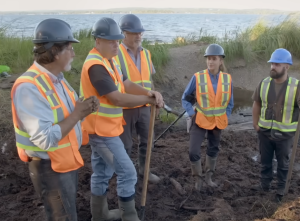
That is where the criticism began to sharpen. Viewers who once watched every borehole with excitement started asking whether the show had stretched the mystery too far. Every piece of wood, every metal trace, every stone formation carried promise, but also doubt. Was Oak Island still moving toward a revelation, or had the legend become trapped inside its own repetition?
Then Rick Lagina’s perspective changed the emotional weight of the conversation. For Rick, the island has never been only about finding a chest in the ground. It has always been about preserving a story that refuses to die. The search matters because it forces forgotten history back into the open. It gives old maps, buried artifacts, lost theories, and unexplained structures a stage where millions of people can ask what happened here, who came here, and why so many traces were left behind.
The History Beneath the Mud
That is what many critics miss. Oak Island is not just a place where people dig. It is a place where history keeps breaking through the surface in fragments. A small artifact can suggest trade. A buried structure can suggest labor. A strange feature in the ground can suggest design. Even when the team does not uncover treasure, they often uncover context, and context can be just as powerful as gold.
Rick Lagina’s deeper purpose appears to be tied to that idea. The show makes history feel alive because it does not present it like a cold classroom lesson. It brings history into danger, uncertainty, and conflict. Instead of reading about the past from a distance, viewers watch the team touch it, test it, argue over it, and risk another season of disappointment for it.
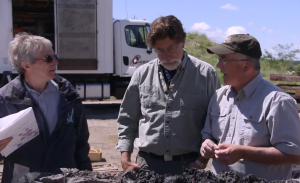
That is why The Curse of Oak Island still holds so many people, even after years of criticism. The show turns forgotten historical questions into living drama. It gives fans a reason to care about old settlements, ancient travel routes, possible military activity, colonial mysteries, engineering theories, and legends that might otherwise remain buried in academic silence. The island becomes a bridge between entertainment and memory.
And that may be the real secret behind its endurance. Treasure can attract viewers once. But history, when wrapped in mystery, can keep them returning for years. Oak Island does not simply ask, “Where is the gold?” It asks whether the past has been misunderstood, whether the official story is incomplete, and whether one small island may still be holding evidence powerful enough to rewrite everything.
Why the Search Still Matters After Season 13
After Season 13, the future of the show feels more emotionally charged than ever. If the team continues, they are no longer only defending a treasure hunt. They are defending the value of the search itself. Every season becomes a battle between exhaustion and belief, between fans who demand proof and those who understand that history rarely reveals itself cleanly.
Rick Lagina’s message gives the show a new kind of urgency. If Oak Island is more than buried treasure, then every discovery matters differently. A coin is not just a coin. A tunnel is not just a tunnel. A date on a test result is not just a number. Each clue becomes part of a larger historical wound that has not fully closed.

That does not erase the frustration. Fans still want answers. They still want the moment when the island finally gives up something undeniable. But it explains why the journey continues to matter. The Curse of Oak Island has become a search for meaning as much as wealth, and that makes the stakes heavier than any chest of gold.
Because if Rick is right, the true purpose of the show is not merely to dig for treasure. It is to make people feel the weight of forgotten history. It is to turn old mysteries into living questions. And somewhere beneath the criticism, beneath the mud, and beneath the island itself, Oak Island may still be hiding the one truth that proves the search was never just about treasure at all.
