
What if the most important story in the Donner Party saga was not the tragedy itself, but the people who walked into the snow to save them? Expedition Unknown follows Josh Gates into the Sierra Nevada, where a forgotten refuge, a reconstructed trail, and the memory of the first relief party begin to pull a buried rescue story back into the light. One wrong turn in winter country could have meant another grave. Instead, the team is tracing the path of the volunteers who turned survival into history.
The Winter Catastrophe History Nearly Consumed
The Donner Party has long stood as one of the most haunting tragedies of the American frontier, a story of ambition, weather, and desperation colliding in the unforgiving Sierra Nevada. The emigrants who entered the mountains in 1846 did not find a passage west. They found hunger, snow, and a winter so severe it turned a migration into a battle for life itself. Their ordeal became legendary, but legends often flatten the people inside them. They reduce the story to suffering and leave out the hard, dangerous work of rescue.
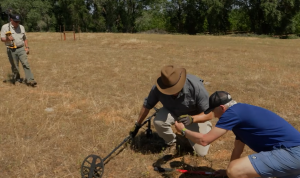
That is where Expedition Unknown changes the angle. Josh Gates joins historians and endurance athletes to investigate Johnson Ranch, the historic refuge where the first rescued emigrants were reunited with civilization. It is easy to remember the desperation of those trapped in the mountains. It is harder to remember the people who went back in. The relief parties did not simply arrive with supplies. They pushed into the same brutal terrain, knowing full well the route could break them before it saved anyone else. Every step they took was a wager against weather, distance, and time.
At Johnson Ranch, the ground itself begins to support what the diaries hinted at for generations. Lidar evidence and period artifacts confirm the location with a clarity that turns memory into map. This was not an abstract waypoint in a survival tale. It was a real threshold between catastrophe and rescue, the place where exhausted emigrants first crossed out of wilderness and back into the world. That makes the site more than historically important. It makes it emotionally charged. Johnson Ranch is where rescue stops being theory and becomes flesh, breath, and relief.
The Route Back Into the Mountains Was Its Own Trial
The expedition does not stop at identifying the refuge. It pushes farther, because the real weight of the story lies in the route itself. By following historical diaries, the team undertakes a remarkable journey to retrace the original rescue trail to Donner Pass exactly 175 years after the first relief party. That decision transforms the investigation from archaeology into reenactment, not in costume or spectacle, but in the more demanding sense of physical remembrance. The mountain is not asked to perform. It is asked to be survived again.
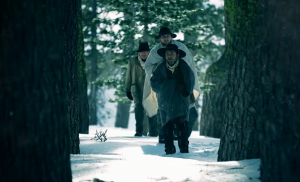
This is where the story sharpens. The rescue route was never easy terrain. It was steep, cold, and merciless, the kind of country that punishes hesitation and exposes weakness. For the original relief parties, every mile meant deciding to continue into danger for the sake of strangers they might never meet. That courage is easy to admire from a distance and much harder to comprehend up close. Josh Gates and the team are not just studying that bravery. They are moving through the conditions that made it necessary.
The historical diaries become more than source material. They become a bridge. Each note, each reference point, and each remembered landmark helps reconstruct the pressure of the original expedition, where volunteer rescuers had to navigate by persistence as much as by direction. In that sense, the trail is not merely a path through the mountains. It is a record of moral resistance. The volunteers who followed it refused to let the Donner Party vanish into the snow, and the journey back along the same route makes that refusal feel immediate again.
The Forgotten Rescuers Deserve Their Own Place in the Story
What makes this expedition so powerful is the shift in emphasis. The Donner Party will always be remembered for endurance under impossible conditions. But the rescue parties deserve equal attention, because they transformed a disaster into a story of human intervention. Without them, the tragedy might have ended in total silence. With them, there was at least a chance for survival, reunion, and memory.
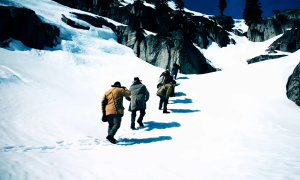
The rediscovery of Johnson Ranch and the retracing of the rescue route reframe the entire narrative. The volunteers were not side characters. They were the force that kept the story from becoming a complete erasure. They entered the mountains not because they were certain of success, but because they believed rescue was worth the risk. That choice matters. It changes the emotional architecture of the whole event. The Sierra Nevada was not only a place of loss. It was also a place where courage pushed back.
For Expedition Unknown, the significance of the investigation lies in that restoration. The expedition honors the forgotten rescuers by making their journey visible again, step by step, ridge by ridge, mile by mile. The evidence at Johnson Ranch confirms the geography. The historical diaries preserve the route. The modern trek brings the danger back into focus. Together they reveal a rescue network strong enough to save dozens of stranded emigrants and powerful enough to survive in memory for 175 years.
Because the Donner Party story has never been only about who was lost.
It is also about who came back for them.
And in the mountains above Johnson Ranch, that act of return still echoes louder than the snow.
