
Beneath an abandoned property, where time has long buried the surface clues, a forgotten network of tunnels is waiting to be exposed. What began as a search inside a historic distillery quickly turned into a descent into America’s hidden criminal past, where every narrow passage, every sealed chamber, and every artifact on the floor seemed to whisper the same unsettling truth: this place was built to hide something illegal, and it was built well.
The Secret Beneath the Distillery
Prohibition did not simply outlaw alcohol. It forced an entire underground economy into the shadows, where hidden distilleries, sealed basements, and covert tunnel systems became lifelines for bootleggers determined to keep the liquor moving. In places where ordinary people saw abandoned properties, smugglers saw opportunity. Beneath the floorboards, behind false walls, and under old foundations, they carved out secret routes that could move illegal alcohol away from prying eyes and straight into the hands of buyers who knew exactly where to look.
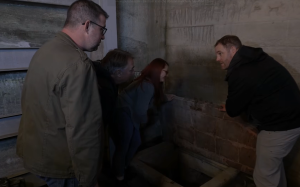
That is the world Josh Gates and his team stepped into when they investigated a historic distillery rumored to contain an extensive underground tunnel system. At first glance, the site looked like another forgotten remnant of a vanished era. But once the team found a narrow hidden entrance and began crawling inside, the property stopped feeling like a ruin and started feeling like a crime scene frozen in time. The air changed. The walls tightened. The darkness deepened. And every inch forward raised the same question: how much of this place was designed to stay hidden forever?
What they found below was not a simple passage or a single escape route. It was the beginning of a maze.
A Maze Built for Smuggling
The deeper the team moved into the tunnels, the clearer the design became. This was not an accidental cavity or a forgotten utility space. It was an interconnected underground network built with purpose, reinforced in places, and shaped by the logic of concealment. The structure suggested coordination, planning, and a level of secrecy that only makes sense when people are trying to move contraband without leaving a trail.
Then came the artifacts.
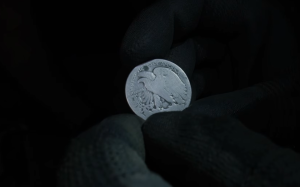
A Walking Liberty half dollar. An old pocket watch. Fragments of glass liquor jugs. None of them belonged to the modern world, and none of them were sitting there by chance. Together, they formed a small but powerful archaeological record of human activity beneath the property. The coin placed the site squarely within the period. The watch hinted at the passage of time inside a hidden world where minutes mattered. The broken glass connected the tunnels directly to the liquor trade of the Prohibition era. These were not random leftovers. They were evidence of movement, handling, storage, and repeated use.
And then the team uncovered something even more revealing: a heavily reinforced underground chamber. A room like that does not exist by accident. It suggests protection, secrecy, and perhaps storage of something valuable enough to justify extra construction. Nearby passageways extended further still, deepening the sense that the tunnel system was far larger than a single local hideout. Every turn suggested a smarter operation. Every junction suggested deliberate planning. This was not just a place where alcohol passed through. It was a concealed transportation route built to outsmart the law.
The House, the Basement, and the Final Clue
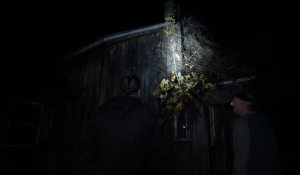
The most striking discovery came when one of the tunnels led directly into the basement of an abandoned house. That detail changes everything. It means the underground network was not isolated from the property above it. It was integrated into the structure itself, giving bootleggers a hidden pathway from one world into another. What appeared to be a quiet, empty house may once have served as a front, a shield, or an active node in a much larger smuggling system.
That connection turns the entire site into something far more significant than a curiosity. It becomes a physical record of how Prohibition-era criminals adapted, engineered, and survived. The tunnel system was not built to impress anyone. It was built to function under pressure. It had to move liquid contraband, hide people, protect supplies, and stay invisible long enough to keep the operation alive. The underground chamber, the artifacts, and the direct basement connection all point toward one conclusion: this property may have been part of a sophisticated bootlegging network that operated just beneath the surface of everyday life.
And that is what makes the discovery so powerful. These tunnels are not only about alcohol. They are about strategy, fear, and the constant tension between law and lawlessness during one of America’s most notorious criminal eras. Beneath the abandoned property, the team did not just uncover old stone and forgotten passageways. They uncovered evidence of an entire hidden economy that once thrived in the dark, where every corridor was a risk and every sealed room carried the weight of a secret.
The surface may be abandoned now, but below it, the story is still alive.
And it is the kind of story that only gets more compelling the deeper you go.
