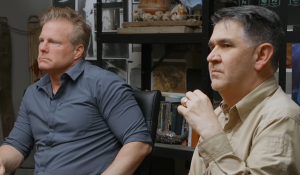
Few experiments at Skinwalker Ranch create as much anticipation as a rocket launch. The moment feels cinematic: the countdown, the sky above the mesa, the instruments waiting, and Travis Taylor watching for the smallest sign that something has changed. But the reason he continues to push rocket experiments is not simply because rockets look dramatic on camera. They offer a rare way to test the vertical space above the ranch, especially in areas where unusual readings, tracking issues, and aerial questions have repeatedly drawn attention. A drone can observe, a camera can record, and a sensor can monitor, but a rocket can move quickly through a target zone while multiple systems watch at once. That makes each launch more than a spectacle. It becomes a controlled attempt to ask whether the ranch reacts when something enters the sky above it.
Rockets Turn the Sky Into a Test Zone
Travis Taylor’s interest in rocket experiments makes sense when viewed through the larger investigation strategy at Skinwalker Ranch. The mystery is not limited to the ground, the mesa, or buried material. Many of the most debated questions involve the airspace above the property, where unusual objects, strange readings, and unexplained tracking behavior have often become part of the conversation. A rocket gives the team a way to send a physical object upward through that space, rather than simply waiting for something to appear. That difference matters because the experiment becomes active instead of passive. The team is not only watching the sky; they are testing how the sky responds.
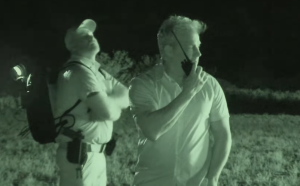
A rocket launch also creates a clean event marker. Before launch, instruments can measure the baseline conditions around the ranch. During ascent, cameras, GPS trackers, radar systems, and spectrum monitors can watch for changes in real time. After the rocket passes through the target zone, the team can compare what happened before, during, and after the flight. That timeline is useful because many strange moments at the ranch are difficult to study once they are over. A rocket allows investigators to create a repeatable moment that gives the data a beginning, middle, and end.
This is why rockets remain different from drones, balloons, or ordinary skywatching. Drones can hover, survey terrain, and provide stable images, but they usually move slowly and predictably. Rockets move fast, climb sharply, and pass through vertical space in a way that can stress-test instruments and timing. If something unusual appears only when an object reaches a certain altitude or crosses a specific area, a rocket may help reveal that pattern more clearly. That does not mean every strange reading connected to a launch is meaningful. It simply means rockets give Taylor and the team another way to provoke measurable conditions instead of relying only on observation.
Why Travis Taylor Keeps Returning to the Launchpad
The reason Travis Taylor continues to push rocket experiments appears to come from a specific scientific instinct: he wants testable patterns, not just strange moments. At Skinwalker Ranch, one unexplained reading can be fascinating, but a pattern is far more valuable. If a signal, GPS issue, visual anomaly, or equipment response appears during one launch, the next question becomes whether it can happen again under similar conditions. Rockets help create that structure because the team can change altitude, location, timing, payload, or surrounding instruments. Each new launch becomes a comparison point against earlier results.
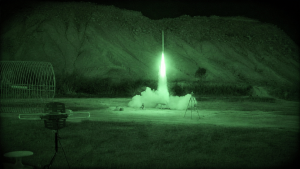
Taylor’s approach also reflects the difficult nature of the ranch itself. Some mysteries can be studied by digging, sampling, or scanning the ground. Others seem to involve the space above the property, which is harder to isolate and control. A rocket experiment gives the team a temporary probe moving through that uncertain zone. If instruments behave normally, that result still matters because it helps define what ordinary conditions look like. If something unusual occurs, the team can compare it with the rocket’s path, speed, altitude, and timing.
This is where the rocket experiments become more valuable than they may appear at first glance. To a casual viewer, a launch might seem like a dramatic attempt to get a reaction from the ranch. To Taylor, it is more likely a way to organize chaos into data. The ranch is filled with questions that can easily become too broad: what is above the mesa, why do signals appear, and why do instruments sometimes behave unpredictably? Rockets narrow those questions into a specific test. When an object moves from point A to point B through the sky, the team can ask exactly what changed along the way.
The Rocket Experiments Still Matter Even Without Final Answers
The value of rocket experiments does not depend on every launch producing a dramatic result. In fact, experiments that produce little or nothing can still help the investigation move forward. A quiet launch may tell the team that certain conditions were not enough to trigger unusual activity. A launch with strange readings may suggest a new altitude, location, or instrument setup worth testing again. That is how research often works in a place where easy answers remain out of reach. The real progress may come from slowly separating coincidence from repeatable behavior.