
Jeremy Clarkson may generate the grand ideas, Kaleb Cooper may understand every turn of the fields, and Lisa Hogan may keep the farm’s public-facing businesses moving, but Charlie Ireland occupies a position that is far harder to define. He rarely arrives with the loudest entrance or the funniest plan, yet many of the farm’s most important decisions seem to pass through him before they can become reality. As an agronomist and land agent, Charlie must consider the details that enthusiasm can easily overlook: cost, regulation, planning, crop management, environmental obligations and long-term risk. That responsibility has earned him the affectionate nickname “Cheerful Charlie,” largely because the information he delivers is often sensible rather than welcome. Beneath that running joke, however, lies a more interesting question: has Charlie quietly become the person who prevents the entire operation from being overwhelmed by its own ambition?
The Man Standing Between an Idea and Its Consequences
Charlie’s role becomes most visible whenever Jeremy announces another ambitious project with the confidence of someone who has already imagined the finished result. A new livestock venture, an unconventional crop, an expanded retail operation or a hospitality business may sound exciting in the first conversation. Charlie is usually the person who must then examine whether the land, budget and relevant rules can support it. His contribution therefore begins where the entertaining idea ends and practical reality takes over. That transition may be less dramatic than driving a tractor through a hedge, but it often determines whether a project can survive beyond its opening burst of enthusiasm.
This is why describing Charlie simply as the farm’s cautious adviser does not fully capture his importance. He brings together several areas that are often treated separately, including agronomy, rural business management, planning and regulatory compliance. His professional work outside the farm also places him close to the wider pressures facing British agriculture, from changing support systems to rising costs and complicated government policy. Charlie has explained that Jeremy’s nickname for him comes from delivering advice that Jeremy does not always want to hear, including warnings about grazing limits and food-hygiene requirements. That makes him less of an obstacle to progress than an interpreter of the realities every working farm must face.
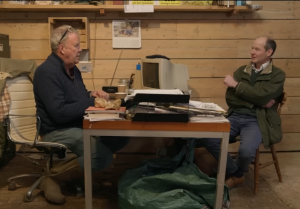
The contrast with Kaleb also helps explain why both men are necessary rather than interchangeable. Kaleb reads the immediate physical condition of the farm through experience, noticing the weather, soil and timing of jobs that cannot be understood from paperwork alone. Charlie looks at the same operation from a different distance, asking whether the numbers work and whether the plan can withstand regulatory scrutiny. Jeremy often stands between those two perspectives, impatient to move forward but dependent on both forms of knowledge. The farm functions because local instinct and strategic oversight correct different kinds of mistakes before they become too expensive.
Saying “No” Can Be a Form of Protection
Charlie’s most recognisable scenes often begin with him discovering what Jeremy intends to do and responding with an expression that suggests several problems have already appeared in his mind. That dynamic works as comedy because viewers can anticipate the collision between enthusiasm and restraint. Yet the humour also reveals something serious about modern farming: a good idea is not automatically a lawful, affordable or sustainable one. Each new venture can bring insurance requirements, food standards, animal-welfare responsibilities, planning restrictions and unexpected operating costs. Charlie’s caution protects the farm not by removing risk entirely, but by making the risk visible before Jeremy commits too much money or time.
The planning disputes surrounding the farm’s commercial ambitions made this protective role especially clear. Jeremy wanted to create new sources of income from the land, but those plans repeatedly entered a world of applications, restrictions and local opposition. Charlie could not guarantee that permission would be granted, nor could he make the disagreements disappear. What he could do was explain the boundaries, identify possible routes forward and prevent frustration from replacing strategy. His presence allowed the story to move beyond a simple conflict between one landowner and a council, showing how rural diversification can become tangled in rules that are difficult for outsiders to understand.
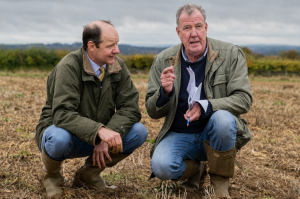
This matters because the farm has never depended on crops alone. Poor weather, disappointing yields and unpredictable prices have repeatedly shown how narrow the margin between survival and loss can become. New ventures may spread that risk, so create fresh expenses and responsibilities that can place even greater pressure on the original business. Charlie appears to understand that diversification is valuable only when it strengthens the operation rather than distracting from it. His recurring concern about costs may sound pessimistic, but it reflects the uncomfortable mathematics behind many real farms, where an impressive asset can coexist with very limited available cash.
The Quiet Role That Holds the Whole Story Together
Charlie is also important because he gives the series a credible connection to the wider agricultural world. Without his explanations, government schemes, environmental requirements, crop decisions and planning rules could appear to be random inconveniences introduced only to frustrate Jeremy. Charlie shows that these systems have real consequences, even when their logic is difficult to communicate within an entertaining programme. He does not always defend the rules, and his public comments indicate that he is willing to criticise policies he believes could harm farming businesses. His position is therefore more complicated than that of a government representative: he is an adviser trying to help farmers operate within systems he may not always consider fair.
That complexity may explain why his influence has grown without requiring a dramatic change in personality. Charlie does not need to compete with Jeremy’s showmanship or Kaleb’s instinctive authority in the fields. His value comes from remaining consistent while the farm expands into increasingly complicated territory. The larger the operation becomes, the more important it is to have someone who remembers that every exciting project creates contracts, costs, deadlines and obligations. What once looked like a supporting role now appears closer to the strategic centre of the entire enterprise.
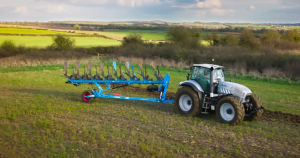
His importance is particularly noticeable when the farm moves beyond traditional agriculture and into retail, hospitality and public events. These ventures require different skills, but they remain connected to the land and to the reputation built around it. A mistake in one area can affect every other part of the business, whether through financial losses, regulatory intervention or damage to relationships within the local community. Charlie’s role may therefore be evolving from agricultural adviser into something closer to a guardian of the operation’s overall structure. That interpretation has not been formally defined, but the expanding scale of the business appears to raise the possibility.
There is also a deeper reason his presence works so well on screen. Jeremy represents momentum, Kaleb represents practical farming knowledge, Lisa represents commercial determination, and Charlie represents consequence. Remove any one of those forces and the balance of the farm would change, but removing Charlie might allow short-term excitement to overpower long-term judgement. His warnings do not always stop Jeremy, and they are not always proved correct in exactly the way he expects. Their value lies in forcing every plan to confront reality before reality arrives on its own terms.
Charlie Ireland may never become the loudest figure at the farm, and that is precisely why his contribution remains so effective. He is not there to eliminate ambitious thinking, but to give it a shape that has some chance of surviving. As the business grows and the challenges become more complicated, his responsibilities may continue to extend far beyond crops and planning applications. Whether that development becomes more explicit in future seasons remains unclear. What already seems difficult to ignore is that the farm’s most cautious voice may also be one of the main reasons its biggest ideas ever reach the field.
