
The ocean has a remarkable way of preserving history—and its secrets. More than eight decades after World War II transformed the Pacific into one of history’s most consequential battlefields, many stories remain hidden beneath thousands of feet of water. In the latest Expedition Unknown investigation, Josh Gates returns to one of those forgotten chapters, following new underwater survey data that has drawn renewed attention to a long-studied wartime wreck site in the Philippine Sea. While the findings stop well short of providing definitive answers, they introduce intriguing possibilities that could help researchers better understand events that have remained largely untouched for generations. As Gates and the team begin examining the evidence, the expedition becomes less about chasing a dramatic revelation and more about uncovering history through careful exploration, modern technology, and respect for those connected to the past.
A New Sonar Survey Opens Another Chapter in an Unfinished Investigation
For decades, historians and marine archaeologists have relied on advances in underwater technology to revisit sites that were once beyond reach. High-resolution sonar, remotely operated vehicles, and digital seabed mapping have transformed the way researchers study shipwrecks, allowing them to examine underwater landscapes with remarkable precision while minimizing disturbance to historically significant locations.
That technological progress forms the foundation of Josh Gates’ latest expedition.
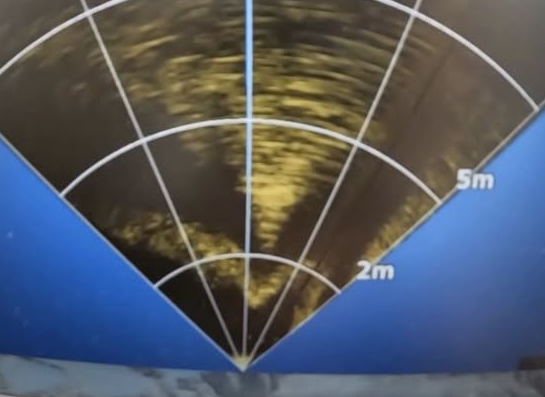
The investigation begins after recent survey data identifies a substantial sonar anomaly near a World War II wreck site in the Philippine Sea. Rather than treating the finding as a confirmed breakthrough, the team approaches it as a promising lead requiring careful examination.
Sonar imagery can reveal unusual shapes and structures beneath the seabed, but interpreting those images is rarely straightforward. Natural geological formations, debris fields, and decades of underwater change can all produce signals that deserve closer investigation before meaningful conclusions can be drawn.
For that reason, Gates and the expedition team combine modern imaging technology with historical research, archival records, and expert analysis. Their goal is not simply to identify an object on a screen, but to understand whether the evidence fits the historical record surrounding the wartime site.
That measured approach reflects one of Expedition Unknown‘s defining strengths. The series consistently presents exploration as an ongoing process rather than a sequence of instant discoveries.
Why Sonar Discoveries Often Raise More Questions Than Answers
At first glance, an unusual sonar return can appear to offer the breakthrough researchers have been waiting for.
In reality, it is often the beginning of a much longer investigation.
Marine archaeology depends on layers of evidence. A sonar image may suggest the presence of a structure or object, but visual documentation, historical records, environmental analysis, and expert interpretation are typically needed before researchers can understand its significance.
The latest expedition illustrates exactly that challenge.
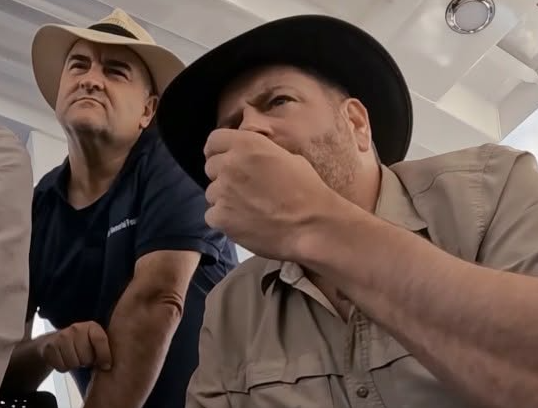
Some of the newly documented survey data may indicate features that warrant further exploration. Others could ultimately prove to be consistent with previously known aspects of the wreck site or natural underwater formations. At this stage, the available evidence raises important questions rather than definitive conclusions.
That distinction matters.
World War II shipwrecks are more than archaeological sites. Many serve as maritime war graves and places of historical remembrance, making careful investigation essential. Every decision about documenting or exploring such locations must balance scientific curiosity with ethical responsibility.
Throughout the episode, Gates avoids presenting possibilities as established fact. Instead, he invites viewers to witness the investigative process itself—where promising clues are tested, challenged, and evaluated before becoming part of the historical record.
It is this commitment to evidence that gives the expedition its credibility. Rather than diminishing the mystery, careful analysis often reveals how much remains to be learned beneath the ocean’s surface.
History’s Greatest Discoveries Begin With Careful Questions
One of the enduring themes of Expedition Unknown is that meaningful discoveries rarely arrive with certainty.
Instead, they emerge through persistence, collaboration, and a willingness to question assumptions.
The latest World War II investigation embodies that philosophy. Whether the sonar findings ultimately identify previously undocumented features or simply encourage researchers to revisit existing interpretations, the expedition demonstrates how modern technology continues to expand the possibilities of historical exploration.
Yet technology alone cannot answer every question.
Historical context, archaeological expertise, and patient research remain essential for transforming intriguing data into reliable understanding. The episode repeatedly emphasizes that each new clue is only one part of a much larger story—one that continues to unfold with every expedition.
More than eighty years after the conflict ended, countless wartime sites remain hidden beneath the sea, preserving stories that deserve careful study rather than sensational claims. Josh Gates’ latest journey reminds viewers that history is not uncovered in a single dramatic moment but through the steady accumulation of evidence and thoughtful interpretation.
For those following the investigation, the most compelling aspect may not be whether one sonar image changes everything. Instead, it is the realization that every responsible expedition brings researchers one step closer to understanding a chapter of history that still holds many unanswered questions.
