
Alaric’s Lost Treasure takes center stage as Josh Gates explores a hidden Roman tomb complex beneath Rome, where ancient clues, buried history, and the shadow of a vanished treasure create one of the most haunting mysteries of late antiquity.
Alaric’s Lost Treasure Still Casts a Long Shadow Over Rome
Alaric’s Lost Treasure is the kind of mystery that never stops feeling larger than history itself. The story begins with the sack of Rome in 410 AD, when Alaric I and the Visigoths shook the Western Roman Empire and left behind one of antiquity’s most famous acts of destruction. What happened after that has fascinated historians for centuries, especially the question of whether a legendary burial or hidden cache might still be waiting somewhere beneath the city. That is why the idea of a hidden tomb complex beneath Rome feels so powerful. It connects the grandeur of the ancient world with the unease of what time chooses to conceal.
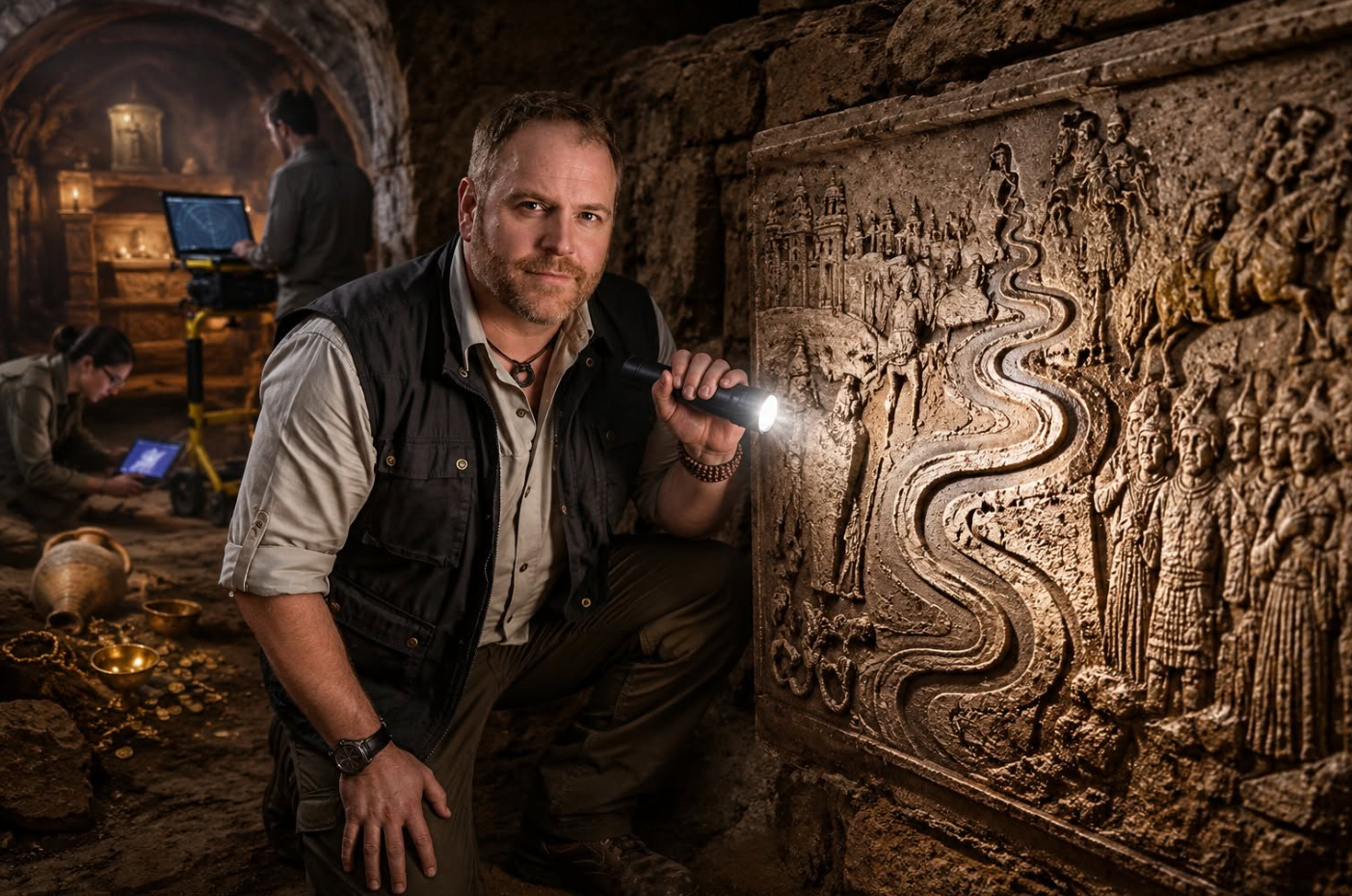
There is something deeply emotional about a treasure story that never behaves like a treasure story. This is not simply about gold or wealth. It is about a moment in history when power shifted, an empire weakened, and memory became fragmented. A lost treasure tied to Alaric does not just suggest riches buried in the earth. It suggests a trail of violence, retreat, and unfinished history. That is what makes the search so compelling. The treasure may be legendary, but the human story behind it is very real. It carries the weight of collapse, survival, and the strange way history survives even when empires do not.
Josh Gates enters that story with the kind of curiosity that makes him so effective on Expedition Unknown. He does not approach the mystery as a distant myth. He treats it as something that may still leave fingerprints on the modern world. Alaric’s Lost Treasure becomes more than a search term in that moment. It becomes a bridge between what Rome was and what it may still be hiding.
Josh Gates and the Hidden Tomb Complex Beneath Rome
The discovery beneath the streets of Rome adds a new emotional layer to the mystery. A previously little-known underground tomb complex is exactly the kind of place that makes history feel alive again. Hidden spaces like this do not just preserve artifacts. They preserve intention. Someone chose to build, seal, or leave something behind there. That choice matters, because it means the past was never random. It was deliberate. And if the tomb complex really points toward Alaric’s buried legacy, then the site becomes more than archaeology. It becomes a message waiting to be understood.
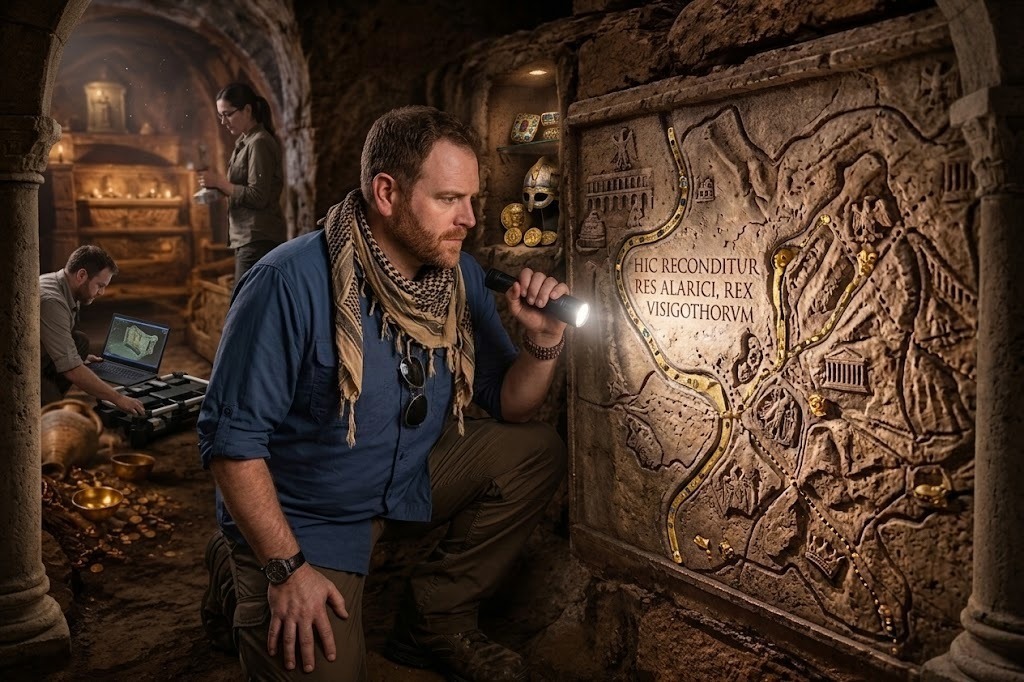
What makes the story especially strong is the way it balances technology and wonder. Gates and his team reportedly used cutting-edge tools, but the atmosphere of the search remains intimate and human. You can almost feel the hush of the underground space, the tension of standing beneath one of the world’s oldest cities, and the sense that each clue might open a door into something far bigger than expected. That mix of precision and suspense is exactly what gives the episode its pulse. It is not just about proving a theory. It is about letting the evidence guide the imagination.
Alaric’s Lost Treasure works so well because it is not a single object or a single answer. It is a living map, as Gates reportedly described it, leading from the present into a chapter of history that has never fully closed. That phrase alone captures the spirit of the expedition. A map is not the destination. It is the promise that the destination exists. In this case, that promise carries all the emotion of a mystery that refuses to disappear, even after sixteen centuries.
Why This Roman Mystery Feels So Powerful Today
The reason this story resonates is that Rome still feels like the center of a world that never quite stopped speaking. Its streets, ruins, and hidden chambers continue to reveal layers of ambition, power, and loss. When a discovery beneath the city points to Alaric, it feels as though the old empire is still trying to tell us something about its own decline. That is what gives Alaric’s Lost Treasure its emotional force. It is not only a search for something buried. It is a search for meaning inside a collapse that changed Europe forever.
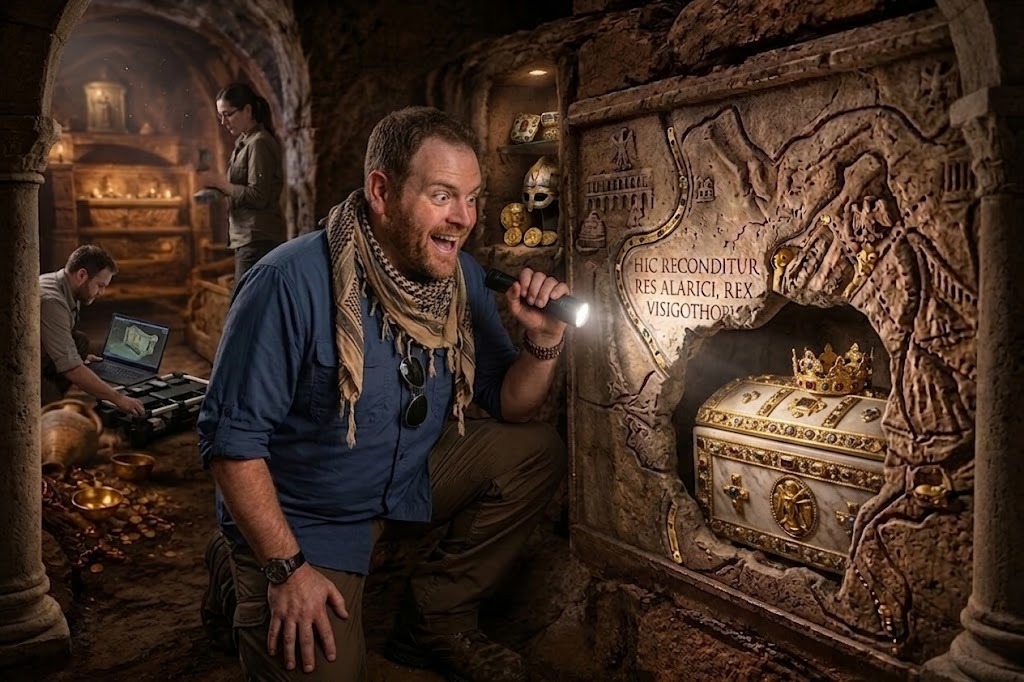
Josh Gates is especially well suited to that kind of story because he understands how to make history feel personal. He knows that the best mysteries are not just about what was lost, but about what the loss meant to the people who lived through it. In Rome, that meaning is everywhere. It lingers in the stones, in the darkness beneath the city, and in the questions that have never gone away. That is why the story feels so complete even while the mystery remains open. It offers wonder without pretending to offer finality.
In the end, Alaric’s Lost Treasure stands out because it turns a famous historical event into something immediate, atmospheric, and alive. Josh Gates’ journey beneath Rome is not simply an archaeological investigation. It is a confrontation with the afterlife of empire, where buried clues still wait for someone patient enough to follow them. And that is what makes the story unforgettable: the sense that history has not ended, only gone underground.
