Oak Island has always been a place where the ground refuses to give up its secrets easily. But every so often, the island stops hiding coins and relics and reveals something far stranger — something that looks less like treasure and more like purpose. That is exactly what happened when the team uncovered a massive buried iron structure in the swamp, a discovery that instantly changed the mood of the search. Because this was not a small artifact or a random fragment. It was a giant of metal, locked beneath layers of mud and time, and it may be the clearest sign yet that Oak Island was built around something far more complex than a buried hoard.
The swamp did not reveal a relic. It revealed intention.
For years, the swamp has been one of the most unsettling places on Oak Island. It resists excavation, swallows equipment, and turns every promising target into another test of patience. That is why this latest discovery feels so different. What emerged from the mud was not a coin, not a cross, and not a decorative object left behind by chance. It was a massive iron form, heavy and deliberate, the kind of thing that immediately makes everyone stop and stare.
The first reaction was disbelief. The second was caution.
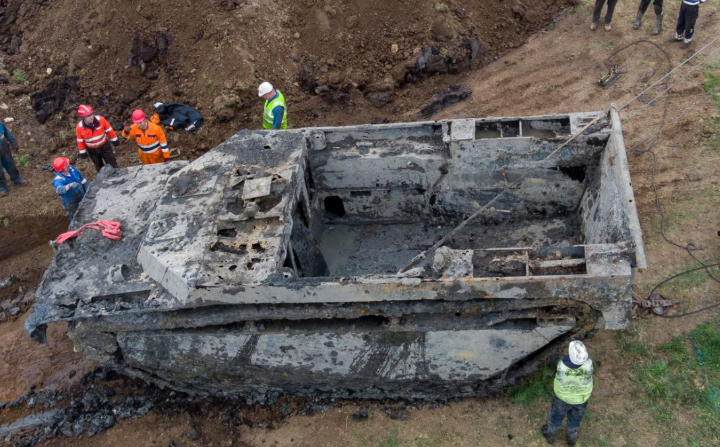
Because anything this large, this durable, and this deeply buried cannot be explained away easily. It does not feel like debris from a forgotten day. It feels placed. Designed. Hidden with a reason that has not yet been understood.
That is the heart of the mystery now. The object is not powerful simply because it exists. It is powerful because it suggests that someone knew exactly what they were doing when they buried it. The swamp may not be a random patch of difficult ground after all. It may be the final cover for a system, a structure, or a machine-like element that once served a very specific purpose.
And if that is true, then Oak Island’s story just moved into an entirely new register.
A buried structure changes the entire conversation
What makes this discovery so gripping is that it does not fit neatly into any of the usual Oak Island theories. It is too large to dismiss as a casual loss, too deliberate to be accidental, and too strange to fit the island’s most familiar treasure narratives without forcing a rethink.
That is why the finding matters so much.

A buried iron structure suggests engineering. It suggests labor. It suggests planning on a scale that goes beyond hiding a few valuables in the ground. Whoever put it there knew the swamp could conceal it. Whoever shaped it understood the terrain, the water, and the pressure of time. That means the island may have been used not just for burial, but for concealment through construction.
That is a much bigger idea.
If the object is part of a larger hidden framework, then the swamp may have once contained an organized installation — a place built to move water, protect access, stabilize ground, or guard something buried deeper below. It could explain why the area has always felt so unnatural. It could also explain why so many previous searches seemed to stop just short of the real answer. The island may not be protecting one treasure. It may be protecting a hidden system.
And once that possibility enters the story, everything becomes harder to ignore.
History, engineering, and secrecy are suddenly colliding
The most compelling part of this find is the feeling that it might bridge several different worlds at once.
On the surface, it looks industrial. Heavy metal. Hard edges. Functional design. But beneath that surface is something more mysterious: the possibility that the object belongs to a much older pattern of concealment. If the structure was built to survive flooding or to hold position in unstable ground, then it may have been part of a deliberate operation tied to Oak Island’s larger underground network.
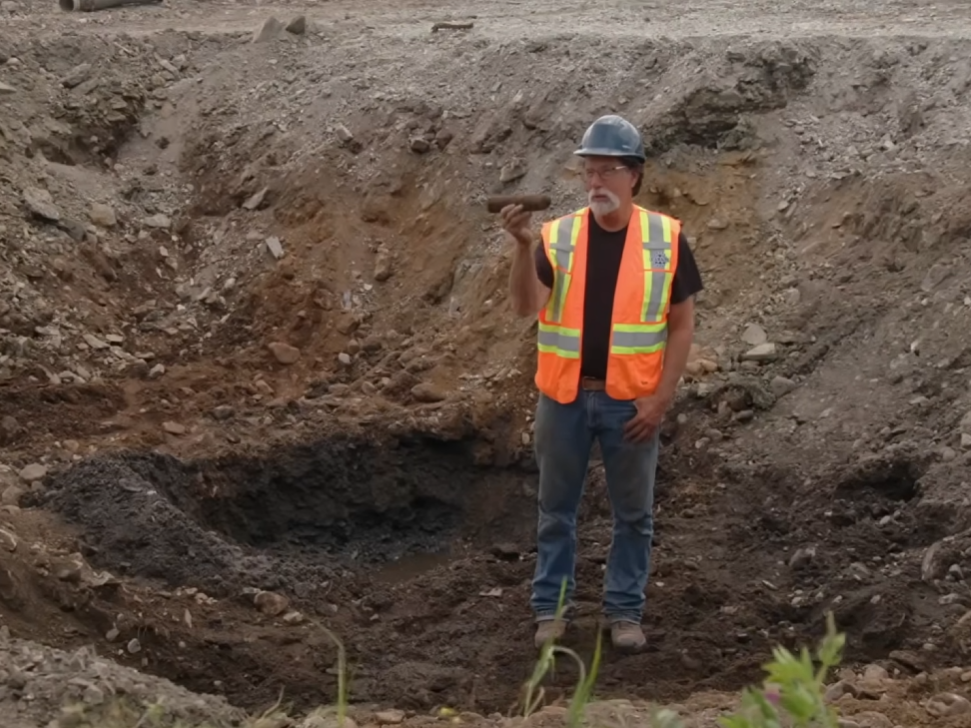
That would change the emotional center of the search.
For years, Oak Island has been framed as a puzzle about buried wealth. But an iron giant in the swamp suggests a different kind of story — one about control, defense, and hidden architecture. Treasure may still be part of the picture, but it no longer looks like the whole picture. Instead, it may be one layer inside a larger design that was built to mislead, delay, or protect.
That is the kind of discovery that keeps the island alive in the public imagination. It does not simply answer a question. It raises a better one.
What was this object doing there, and what was it meant to guard?
Why this discovery feels like a turning point
Oak Island has survived for generations because it knows how to stay one step ahead of certainty. But a find like this narrows the gap. It gives the team something tangible, something large enough to measure, study, and interpret. That alone makes it valuable. Yet its deeper value lies in what it implies: that someone long ago invested serious effort in hiding something inside the swamp, and that effort may have been part of a larger plan.
The emotional power of the discovery comes from that sense of design.
A random object can be brushed aside. A constructed iron form cannot. It forces the team to ask whether the swamp was used as a shield, a container, or a doorway to something below it. It also forces fans to reconsider just how much of Oak Island’s mystery may already be sitting in plain sight, disguised as difficult terrain.
That is why this moment matters.
Because if the buried iron giant is real, then Oak Island may not simply be a place where history was lost.
It may be a place where history was engineered to disappear.
And now that the swamp has finally given up part of its secret, the next question becomes impossible to ignore:
If something this large was hidden beneath the mud, what else was built around it — and how much deeper does the island’s true story still go?
