
What if Expedition Unknown is not chasing a vanished plane at all—but the broken remains of a crossing that ended just short of Newfoundland? Nearly a century after L’Oiseau Blanc disappeared into aviation legend, a drone-based magnetic survey at Gull Pond begins producing anomalies that do not fit the surrounding geology. Then a rocky island tied to the aircraft’s final approach yields a pair of unsettling clues, and a fast-moving storm threatens to swallow the search before the team can learn what really happened here.
The Flight That Vanished Before Lindbergh Changed History
In 1927, the race across the Atlantic was still a brutal contest between courage, engineering, and sheer luck. Long before Charles Lindbergh completed his historic solo flight, the French biplane L’Oiseau Blanc—“the White Bird”—took off with its own bold attempt to cross from Europe to North America. It never arrived. No triumphant landing. No clear crash site. No final transmission that could pin down its fate. Only absence, and the kind of mystery that grows larger every time a generation fails to solve it.
That silence has turned the White Bird into one of aviation history’s most enduring riddles. Did the aircraft vanish over the open sea, swallowed by weather and distance? Or did it make landfall in the wild, remote edge of Newfoundland before breaking apart somewhere beyond the reach of early search efforts? Those questions are what drive Josh Gates and a specialized team of archaeologists, drone operators, and magnetic survey experts led by Rick into one of the most unforgiving landscapes on the map.
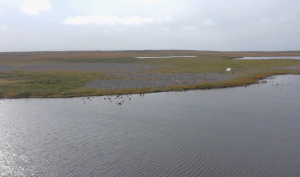
The terrain itself feels like an adversary. Gull Pond offers no easy answers, only water, stone, and the suspicion that something significant may be buried beneath both. A search like this depends on more than hope. It depends on the rare moment when modern technology stumbles onto the physical trace of a nearly impossible event. And when that trace appears, it can transform an old aviation legend into something far more dangerous for the story that history has been telling for decades.
The Anomalies at Gull Pond Point Toward a Hidden Breakup
The first breakthrough does not arrive with a dramatic wreck or a twisted fuselage. It arrives as data that refuses to behave.
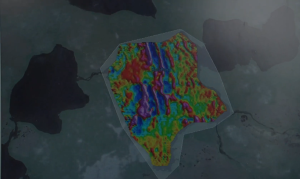
Drone-based magnetic imaging over Gull Pond reveals several anomalous targets that do not match the surrounding geology. In most searches, an anomaly is just a question mark. Here, it feels like a hand reaching up from the past. One target in particular stands out near a rocky island linked to the aircraft’s supposed last approach, and suddenly the investigation acquires a direction. The White Bird no longer feels like a vanished myth drifting over the Atlantic. It feels close. Tangible. Almost within reach.
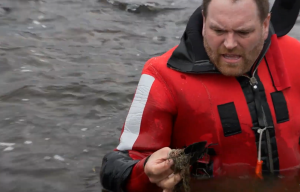
When the team reaches the island, the ground begins offering smaller but far more persuasive clues. They recover what appears to be aircraft-related safety wire, the kind of detail that instantly changes the meaning of the search. Not a story. Not a rumor. Hardware. Physical evidence. The kind of thing that can survive a crash, a storm, and eighty years of uncertainty. Nearby, they uncover a heavy metal plate or cover, another object that seems too deliberate to ignore and too unusual to dismiss as chance.
Taken together, the finds create a picture that is hard to shake: the White Bird may not have plunged into the ocean far offshore. It may have broken apart nearby, close enough to land for fragments to survive in the island’s harsh terrain. That possibility turns the search into something far more intense than aviation archaeology. It becomes a race to reconstruct a final moment that the Atlantic, the coastline, and history itself have kept hidden.
The Storm May Have Interrupted More Than the Search
Just as the team begins to press deeper, the weather closes in. The storm is sudden, severe, and unforgiving, forcing an evacuation before the island can yield more of its story. In a setting like this, weather is not merely background. It is part of the mystery. The same forces that may have destroyed L’Oiseau Blanc are still active now, shaping what can be seen, touched, or recovered before darkness and wind take control.
That interruption matters because this is not simply a hunt for debris. It is an attempt to close the gap between legend and evidence. The magnetic anomalies, the safety wire, the metal plate, and the island’s position relative to the aircraft’s suspected route all pull in the same direction. None of them alone proves the full story. But together they suggest a highly plausible scenario: the White Bird may have reached Newfoundland only to come apart near the shore, leaving fragments scattered where no one thought to look.
For Expedition Unknown, that is the real power of the search. It does not need to turn L’Oiseau Blanc into something bigger than it was. The aircraft was already historic. What the investigation does is force the mystery back into the physical world, where wreckage, weather, and geography can finally be weighed against the old legends. If further work confirms a breakup near Gull Pond, then the question changes forever. It is no longer whether the White Bird vanished. It is how close the world came to finding it all along.
Because once the anomalies started lining up, the old story stopped feeling like a disappearance.
It started feeling like a crash history never finished writing.
