
A forgotten inscription spoke of famine. A sealed tomb concealed a body untouched for more than 4,000 years. As Josh Gates descended beneath the sands of Saqqara, every discovery suggested Egypt’s greatest empire did not simply disappear—it unraveled from within. What lay hidden beneath later burials promised to expose the devastating chain of events that shattered one of history’s most powerful civilizations.
The Warning Carved Into Stone Before an Empire Fell
For centuries, Egypt’s Old Kingdom stood as one of humanity’s greatest achievements, its pharaohs commanding unrivaled authority while colossal pyramids reshaped the desert skyline. Then, almost unbelievably, that seemingly unstoppable empire fractured into chaos. To uncover the truth behind this dramatic collapse, Josh Gates joins Dr. Yasmin El Shazly and an archaeological team investigating elite cemeteries near Luxor and Saqqara, where forgotten tombs preserve the voices of those who witnessed the kingdom’s final days.
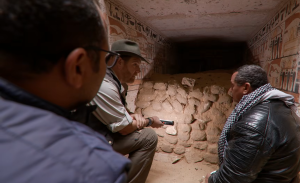
Their search begins inside the tomb of a powerful regional governor whose inscriptions paint a chilling picture of a nation in crisis. Instead of celebrating prosperity, the carved texts describe widespread hunger, growing conflict, and desperate efforts to protect local communities as royal authority weakened. These were not mythical tales written centuries later—they were firsthand testimonies from a man who lived through Egypt’s darkest transition. Combined with archaeological evidence pointing to prolonged drought and environmental hardship, the inscriptions reveal a kingdom slowly breaking apart as famine spread, resources disappeared, and ambitious regional rulers began replacing the once-unquestioned power of the pharaoh. What appeared to be an eternal civilization had become frighteningly fragile.
Beneath a Noble’s Tomb, the Sands Concealed a Second History
The investigation soon shifts north to Saqqara, where another elite Old Kingdom tomb presents an even greater mystery. At first glance, it appears to be the final resting place of a high-ranking noble who lived during Egypt’s golden age. But as the excavation pushes beneath later construction, the archaeological layers begin telling a far more unsettling story.
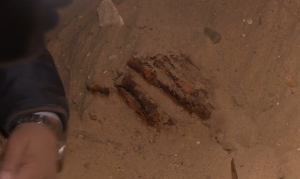
Instead of remaining untouched, the ancient burial chamber had been reopened centuries after its original owner was laid to rest. Intrusive burials were carefully inserted into the tomb during the political turmoil that followed the collapse of centralized rule, transforming a royal-era monument into a cemetery reused by later generations. Then comes the expedition’s most extraordinary discovery. Hidden beneath the intrusive graves rests a remarkably preserved Old Kingdom mummy alongside fragments of its original wooden coffin, surviving where few expected anything to remain intact after more than four millennia.
The discovery dramatically illustrates the changing realities of a civilization in decline. During an age of stability, Egypt’s elite built magnificent tombs designed to remain sacred forever. Yet during the First Intermediate Period, desperation appears to have outweighed tradition. Ancient monuments once reserved for powerful nobles became practical burial spaces for people struggling to navigate a fractured kingdom, reflecting how deeply political collapse had reshaped Egyptian society.
A Tomb That Reveals How Egypt’s Greatest Civilization Slowly Unraveled
Together, the inscriptions from Luxor and the discoveries beneath Saqqara create an extraordinary archaeological timeline of collapse. Rather than pointing to a single catastrophic event, they reveal a nation weakened by converging disasters. Prolonged drought reduced agricultural production, famine intensified competition for survival, regional governors accumulated unprecedented power, and the centralized authority that had united Egypt for centuries gradually dissolved. The transformation unfolded not through one dramatic battle, but through countless local crises that slowly dismantled the foundations of an empire.
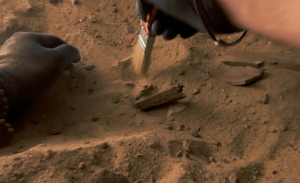
For Josh Gates and the archaeological team, the remarkably preserved mummy and reused burial chamber represent far more than isolated discoveries. They provide rare physical evidence that ordinary people adapted to extraordinary hardship, altering burial customs as ancient traditions collided with the harsh realities of political instability. Every intrusive grave becomes a silent testimony to a society forced to redefine its relationship with both the dead and the past.
The greatest revelation emerging from these excavations is not simply how Egypt’s Old Kingdom ended, but how its people endured after the collapse. Long after the pharaohs lost their grip on power, later generations continued returning to the monuments of a vanished age, seeking protection, memory, and perhaps hope among the tombs of those who had once ruled the world. Hidden beneath layers of sand and centuries of history, these forgotten burials reveal that the fall of Egypt’s first great empire was not the end of its story—but the beginning of one of its most remarkable chapters.
