
For nearly two centuries, the Atlantic Ocean kept one of America’s darkest maritime secrets locked beneath its waves. Historians believed the legendary SS Pulaski—and the fortune that vanished with it—had been swallowed forever. But when a modern expedition descended toward an unexplored sonar target, the seabed began revealing something no one expected. What emerged wasn’t just a shipwreck. It was the first chapter of a mystery that history had never truly finished telling.
The Sonar Signal That Reopened America’s Forgotten Maritime Nightmare
When the SS Pulaski steamed out of Savannah in 1838, she represented the future of American travel. Faster, more luxurious, and equipped with cutting-edge sidewheel steam technology, the vessel carried some of the South’s wealthiest passengers northward along the Atlantic coast. Then, without warning, disaster struck.
A catastrophic boiler explosion ripped through the ship in the darkness, tearing the vessel apart before it disappeared beneath the waters off North Carolina. Nearly 130 people lost their lives in what would later become known as the “Titanic of the South.” Along with them vanished family fortunes, priceless belongings, and a legendary cache of gold and silver coins believed to be worth millions today.
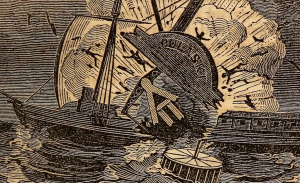
For generations, the ocean refused to surrender its secrets. Countless theories emerged about where the Pulaski had broken apart, yet the main wreck remained frustratingly beyond reach. It became one of America’s greatest unsolved maritime mysteries—not simply because of the lives that were lost, but because the most important evidence had seemingly disappeared forever beneath layers of sand and darkness.
Everything changed when newly identified sonar targets caught the attention of an expedition led by Josh Gates and an experienced team of marine salvage specialists. Instead of another dead end, the strange shapes on the seafloor hinted that history might finally be waiting to speak.
Every Dive Uncovered Proof the Atlantic Had Been Hiding the Truth
As divers descended into the cold depths, expectations quickly gave way to astonishment.
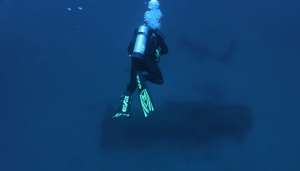
Emerging from the sediment were enormous sections of the Pulaski itself. Massive engine components appeared exactly where no one expected them. Nearby, the unmistakable remains of the ship’s paddle wheel assembly confirmed what historians had spent generations trying to prove: substantial portions of the legendary steamship had survived.
But the discoveries were only beginning.
Sweeping the wreck with metal detectors produced a signal unlike countless others before it. Resting quietly beneath nearly two centuries of sand lay an 1836 United States gold coin. It was an extraordinary find—but it proved to be only the first.
Soon, more gold coins emerged.
Then silver.
Then dozens more.
Each recovered artifact transformed the wreck from a historical curiosity into one of the most significant maritime archaeological discoveries in recent American history. These were not random treasures scattered across the seabed. They were silent witnesses to the exact moment when luxury, hope, and unimaginable tragedy collided in the middle of the Atlantic.
With every structural section mapped and every artifact documented, investigators began piecing together the Pulaski’s final moments with a level of clarity that had never before been possible.
The Greatest Discovery Was Never the Gold Beneath the Sea
The glittering coins naturally captured headlines, but the true value of the expedition reached far beyond buried treasure.
For nearly 190 years, the SS Pulaski existed somewhere between documented history and enduring legend. Survivors’ stories, fragmented records, and unanswered questions painted an incomplete picture of one of America’s deadliest maritime disasters. Now, the wreck itself has become the missing witness.
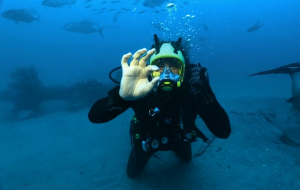
The surviving engines, mechanical structures, and paddle wheel remains provide powerful physical evidence that allows researchers to reconstruct how the catastrophic boiler explosion unfolded and why the ship broke apart so violently. Every recovered object adds another piece to a puzzle left unfinished since 1838.
Perhaps that is why this discovery feels so compelling.
The Atlantic did not simply preserve gold.
It preserved answers.
The sea guarded the final testimony of the Pulaski until technology finally became capable of listening. What was once remembered only as the “Titanic of the South” is no longer defined solely by tragedy or lost wealth. It now stands as a remarkable archaeological breakthrough—one that reconnects modern America with a disaster that shaped generations but was never fully understood.
Nearly two centuries after the SS Pulaski vanished beneath the waves, the wreck has begun telling its story again.
And judging by what has already surfaced from the darkness, history may still be hiding its most extraordinary revelations beneath the ocean floor.
