
Oak Island has always attracted people who can look at the same clue and see a different possibility. That is why Travis Taylor’s presence stands out. He is often associated with investigations into unusual phenomena, but on Oak Island his role takes a very different shape. Instead of pushing the story toward aliens or impossible claims, he brings a pattern-seeking perspective to one of the island’s strangest interpretive threads: Freemasonry, the phrase “as above, so below,” the Taurus constellation, the Pleiades, and the idea that the sky itself may have been used as a kind of symbolic map. It is a theory that has not been confirmed, and it should be treated carefully. Still, it offers a clean and fascinating way to understand why someone like Travis fits the island’s mystery so well.
A Different Kind of Investigator Enters the Oak Island Puzzle
Travis Taylor’s appearance on Oak Island is interesting because he does not arrive as a traditional treasure hunter. He is known to many viewers as a scientist and television investigator connected with unusual cases, advanced technology, and strange patterns that often require open-minded analysis. That background could easily lead to a more sensational reading of his role, but the Oak Island discussion takes a more grounded path. Here, Travis is not framed as someone chasing extraterrestrial explanations or turning the island into science fiction. Instead, his value comes from his ability to examine symbolic alignments, hidden design, and the possibility that older builders or thinkers may have used the heavens as part of their worldview.
The idea he explores sits at the intersection of history, geometry, belief, and interpretation. Oak Island has long been surrounded by theories involving Freemasonry, medieval symbols, sacred geometry, and hidden codes. Within that atmosphere, the phrase “as above, so below” becomes especially important because it suggests a relationship between the sky and the earth. In this reading, patterns in the heavens may have been mirrored on land through landmarks, structures, or symbolic placements. Travis’s unusual perspective fits because he is comfortable asking whether a pattern could carry meaning without immediately claiming that it must be true. That distinction keeps the theory intriguing without turning it into an overstatement.
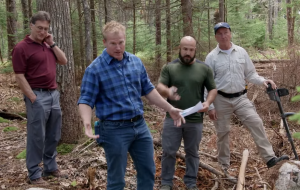
The connection to Taurus and the Pleiades adds another layer to the discussion. If the island’s landscape, certain locations, or historical interpretations appear to echo celestial arrangements, then the team can ask whether the sky was being used as a guide, a code, or a source of symbolic meaning. This does not mean anyone has demonstrated that Oak Island was deliberately designed as a star map. It simply means the theory opens a new type of question. Instead of asking only where something may be buried, the team can wonder whether the island’s layout, stories, and symbols were meant to be read in a different way. For longtime followers, that shift gives the mystery a fresh intellectual charge.
Why “As Above, So Below” Feels So Compelling on Oak Island
The phrase “as above, so below” matters because it gives the theory a shape that feels both ancient and cinematic. It suggests that the world above and the world below may reflect each other, not literally in every detail, but through symbolic thinking. In the context of Oak Island, that idea is powerful because the island has always been a place where surface clues point toward deeper possibilities. A stone, a line, a symbol, or an alignment can feel like more than a physical object when placed inside a larger pattern. Travis’s perspective helps bring that pattern into focus, while still leaving room for doubt.
Freemasonry enters this discussion because it has often been associated with symbols, geometry, ritual language, and layered meaning. Many Oak Island theories have drawn on Masonic themes because the island’s mystery seems to invite questions about design and concealment. The team wondered whether certain symbolic ideas could help explain why specific locations or features might matter. That does not mean Freemasons created the island’s mystery, and it does not mean every symbol must be Masonic. It means the theory may suggest a way of reading the clues that goes beyond ordinary treasure hunting. In a mystery built from fragments, symbolic frameworks can become tempting, but they also demand caution.
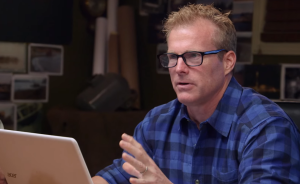
The Taurus and Pleiades angle is especially interesting because it turns the sky into part of the investigation. Human cultures have used stars for navigation, calendars, storytelling, and sacred meaning for thousands of years. If someone with symbolic or maritime knowledge wanted to encode information, the heavens could offer a dramatic reference point. That possibility could point to a hidden design, but it could also reflect coincidence or selective interpretation. This is why Travis’s role is useful: he can entertain the pattern without pretending the pattern has already been proven. His presence gives the theory a disciplined curiosity.
This is also where his unusual background becomes an advantage rather than a distraction. Oak Island needs practical experts, but it also benefits from people who can connect distant ideas without losing sight of evidence. A geologist may read the ground, a metal specialist may read the artifact, and a historian may read the archive. Travis reads the pattern, the alignment, and the possibility that human intention may have been expressed through design. That does not make him the person who unlocks the mystery. It makes him the kind of voice who can ask a question others might miss.
The appeal of this theory is not that it gives Oak Island an easy answer. Its appeal is that it changes what the clues might mean. If the island contains symbolic alignments, then the search may not only be about digging in the right place. It may also be about understanding the mindset of whoever created, used, or later interpreted those locations. That opens a deeper question about whether Oak Island’s mystery is practical, ceremonial, navigational, or some combination of all three. The answer remains unclear, but the question itself is valuable.
The Value of an Unusual Perspective in an Unfinished Mystery
Travis Taylor’s role matters because Oak Island has never been solved by one kind of thinking. The mystery has survived precisely because it resists simple categories. It is part treasure legend, part archaeological puzzle, part historical debate, and part symbolic landscape. A conventional approach can test soil, scan underground features, and date objects, but some theories require another kind of lens. Travis brings that lens without needing to turn the story into something careless or exaggerated. His perspective is unusual, but not automatically unreasonable.
That balance is what makes this angle so clean for an entertainment analysis piece. It acknowledges Travis’s reputation while showing that his Oak Island role is different from the more extreme assumptions some people might expect. He is not making the island about alien contact. He is exploring whether human beings may have used stars, symbols, and philosophical ideas to organize meaning on the ground. That is a much stronger and more credible angle because it stays within the world of history, belief, and pattern recognition. It allows the mystery to feel expansive without leaving the evidence behind.

The theory also reminds readers that Oak Island’s greatest strength is not one clue, but the tension between many clues. A single symbol may not establish a hidden design. A single alignment may not be enough to support a theory. A single phrase like “as above, so below” may invite interpretation without proving intent. Yet when these ideas appear near discussions of Freemasonry, Taurus, and the Pleiades, they create a question that feels worth examining. Could the island’s hidden past involve a symbolic map, or are people simply finding patterns in a mystery that has always encouraged them?
In the end, Travis’s perspective does not close the case, and it should not be treated as if it does. What it does is give Oak Island a different kind of depth. It asks people interested in the mystery to look up as well as down, to consider the sky as well as the soil, and to think about meaning as well as material evidence. The answer remains unresolved, and the theory has not been confirmed. But in a place where every clue seems to open another door, Travis Taylor’s unusual way of seeing the island may be exactly why his presence feels so valuable.
