
Diddly Squat’s move towards laser mapping, automated machinery and robot tractors offers an intriguing glimpse of how farming may change in the years ahead. However, Kaleb Cooper’s cautious response raises a more difficult question than whether the technology can complete a task successfully. Machines may reduce physical labour and improve precision, but farming also depends on judgement built through years of observation. The real test is whether data and automation can ever replace the local knowledge required to understand soil, weather and seasonal timing. At Diddly Squat, that knowledge remains one of Kaleb’s greatest strengths.
Diddly Squat Takes a Step Towards Automated Farming
Season 5 moves Diddly Squat in a noticeably more technological direction as Jeremy Clarkson begins exploring ways to reduce pressure on the people running the farm. The new approach includes laser-based field mapping, automated equipment and agricultural machines capable of completing certain jobs with much less direct human control. For Jeremy, the attraction is easy to understand because the farm is constantly dealing with too many jobs and too little time. Crops must be planted and managed while animals, machinery, the farm shop and other businesses continue to demand attention. A machine that can complete repetitive work without becoming tired appears to offer a practical solution to one of the farm’s most persistent problems.
That search for a more efficient system takes Jeremy and Kaleb to the Netherlands during Season 5. The journey is especially significant for Kaleb because it represents his first trip abroad and places him in a farming environment that looks very different from the land he knows around Chipping Norton. There, the pair examine advanced agricultural systems designed to make farming more precise, more automated and potentially less dependent on drivers spending long hours inside tractors. The technology offers the possibility of following exact routes, recording detailed information and repeating tasks with a level of consistency that can be difficult for a person to maintain. What begins as an entertaining trip therefore becomes a serious examination of whether similar ideas could work under the far less controlled conditions of Diddly Squat.
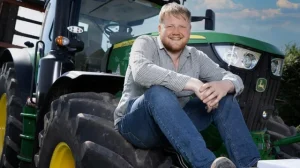
On paper, robot tractors and automated field systems offer several clear advantages. They can follow programmed routes with precision, reduce unnecessary overlap and potentially lower the amount of fuel, seed or treatment wasted during fieldwork. Some machines can also collect large amounts of information while they operate, helping farmers identify differences in crop growth or soil conditions across the same field. That could allow work to be planned more carefully rather than treating every part of the land in exactly the same way. Yet the technology shown in Season 5 also creates a more important question, because completing a programmed journey across a field is not the same as understanding the field itself.
Kaleb’s Experience Cannot Be Reduced to a Set of Instructions
Kaleb’s value at Diddly Squat has never depended only on his ability to drive tractors or operate complicated machinery. From the beginning of the programme, his real importance has come from understanding how the land behaves and recognising when a plan that looks sensible on paper may fail in practice. He knows where water tends to collect, which areas are likely to become difficult after rain and how quickly conditions can change during a narrow working window. That knowledge is not simply a collection of facts that can be entered into a computer once and then forgotten. It is a constantly changing judgement shaped by weather, past experience and close observation of the same land over many seasons.
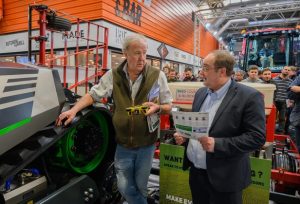
A digital map may show that a field is ready to be worked, but it may not fully capture the condition of every corner at the exact moment a machine enters it. One area may still be too wet for heavy equipment, while another may have dried enough to support planting or cultivation. A weather forecast may predict several hours without rain, yet the appearance of the sky, the direction of the wind or the feel of the soil may suggest that the available window is much shorter. Kaleb has spent years learning to recognise those small signals and connect them with the likely consequences for the crop. A robot can measure conditions, but someone still has to decide what those measurements mean and whether the original plan should continue.
This is why Kaleb’s caution should not automatically be seen as resistance to new technology. He regularly works with modern machinery and understands the value of equipment that makes difficult jobs faster or more accurate. His concern appears to be whether the technology can cope with the unpredictable conditions of a real working farm rather than a carefully prepared demonstration. Jeremy tends to focus on what a machine could achieve if everything works as intended, while Kaleb is more likely to consider mud, mechanical failure, repair costs and sudden weather changes. That contrast does not make one of them forward-looking and the other old-fashioned; instead, it shows the difference between enthusiasm for an idea and responsibility for making that idea work on the land.
The Future of Farming May Require Both Robots and People Like Kaleb
The larger question raised by Season 5 is not whether automated machinery will become more common in farming. Precision guidance, satellite mapping, robotic weeding and driverless systems are already becoming part of agricultural work in different parts of the world. These tools can reduce repetitive labour, improve accuracy and allow farmers to use time and materials more efficiently. At a farm like Diddly Squat, they could take over long, predictable tasks while leaving Kaleb and Jeremy free to focus on decisions that require closer attention. Used in that way, a robot tractor would not replace the farmer but would become another specialised tool under the farmer’s control.
The danger comes when automation is mistaken for complete independence. A machine may be able to travel without a driver, but it still depends on accurate programming, suitable conditions and someone capable of recognising when the plan has stopped making sense. It cannot remove uncertainty from weather, soil or crop development, and it cannot guarantee that every field will respond in the same way. British farming often operates within narrow seasonal windows, where a delay of only a few days can affect planting, yield or soil damage. Technology may help farmers respond faster, but the final decision still requires someone who understands the consequences of acting too early, too late or in the wrong conditions.
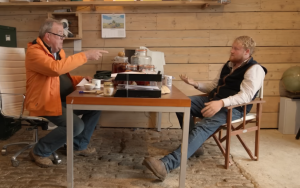
This is why the apparent contest between robot tractors and Kaleb Cooper may be misleading. The machines offer endurance, repeatability and detailed information, while Kaleb provides interpretation, adaptability and memory. He knows which problems can wait, which changes deserve immediate attention and when a technically efficient plan could create a larger problem later. Season 5 has not suggested that his role is becoming unnecessary, nor has it established that Diddly Squat is ready to hand control of its fields to autonomous equipment. Instead, the experiment appears to show that the farm’s future may depend on combining the strengths of both.
Robot tractors may eventually remove many of the hours spent driving in straight lines across the same ground. They may improve planting accuracy, reduce waste and help a smaller team manage a growing amount of work. However, the land will continue to change, the weather will remain unpredictable and machinery will still encounter situations that its designers did not expect. When that happens, Diddly Squat will need more than a sensor, a map and a programmed route. It will need someone who can look at the field, understand what has changed and make a decision before the numbers have fully explained the problem. For now, that is the kind of knowledge Kaleb Cooper possesses, and it remains far more difficult to replace than the person sitting behind a steering wheel.
