Few places on Skinwalker Ranch attract as much attention as the Triangle, especially when equipment begins behaving in ways the team does not expect. Cameras, sensors, GPS units, batteries, drones, and signal monitors can all fail in ordinary outdoor conditions, and that is important to remember before turning every malfunction into a mystery. Dust, heat, weak connections, software glitches, electromagnetic interference, and sensor drift can all create confusing results in the field. But the reason the Triangle keeps drawing attention is not simply that equipment sometimes fails there. It is that repeated failures, strange readings, or unstable signals near the same area may suggest a pattern worth reviewing. The question is not whether every failure is unexplained, but whether the location itself keeps forcing the team to look twice.
Why the Triangle Is a Tough Place for Field Equipment
The Triangle has become one of the central locations in the Skinwalker Ranch investigation because many experiments return to that same area again and again. The team has used a wide range of tools there, from drones and GPS devices to cameras, sensors, signal monitors, and other field instruments. In a controlled indoor lab, equipment can be protected from dust, temperature swings, uneven ground, and weak signal conditions. On the ranch, however, those devices are exposed to a harsh outdoor environment where small issues can quickly become major problems. That means a malfunction near the Triangle does not automatically point to anything unusual.
Batteries are one of the simplest examples. In field conditions, battery performance can drop because of temperature, age, power demand, or poor contact inside the device. A drone, camera, or sensor that works normally before a test may behave differently once it is under stress, especially if it is transmitting data, recording video, or using GPS at the same time. Heat can also affect electronics by pushing internal components outside their ideal operating range. Cold can reduce battery output, while rapid changes in temperature can create condensation or unstable readings. These are ordinary explanations, but they still matter because they can look mysterious when they happen during a dramatic experiment.
Dust and terrain add another layer of difficulty. Skinwalker Ranch is not a clean testing site with perfectly stable surfaces and protected cables. Fine dust can get into connectors, cover lenses, interfere with moving parts, or weaken contact points between batteries and devices. Rough ground can cause vibrations, small impacts, or unstable mounting positions, especially when equipment is being moved quickly during a test. Even a slightly loose cable or sensor housing can create readings that appear strange on a monitor. Before the team can treat a failure as meaningful, they have to rule out these everyday field problems.
Signals are even more complicated because they depend on the environment around the device. A weak signal can drop out because of distance, terrain, antenna position, battery strength, or interference from other electronics. GPS can also become unreliable when signals bounce off surfaces, a problem known as multipath. In rugged terrain, cliffs, metal objects, vehicles, and equipment can reflect signals in ways that confuse a receiver. That can make a location appear wrong, unstable, or inconsistent, even when the device itself is not broken.
When Ordinary Failures Start to Feel Less Ordinary
What makes the Triangle interesting is not the existence of equipment failure by itself. Any outdoor investigation can produce dead batteries, drifting sensors, corrupted readings, or unstable GPS data. The more important question is whether those problems happen repeatedly in the same place, under similar conditions, or during specific types of experiments. If one camera fails once, it may be nothing more than a technical issue. If multiple devices behave strangely near the same area across different tests, the team has a stronger reason to compare the data carefully.
Electromagnetic interference is one possible factor that can make equipment behave unpredictably. Many devices rely on clean signals, stable power, and accurate sensors to function properly. If the environment contains radio noise, electrical activity, strong transmissions, or interference from nearby equipment, readings can become unstable. A sensor might drift, a GPS unit might jump, or a monitor might display data that looks more dramatic than it really is. This does not mean the interference is mysterious, but it does mean the source of that interference becomes important.
Software can also play a role in confusing field results. Modern devices often depend on firmware, calibration routines, automatic filtering, and internal error correction. A glitch in one of those systse a device to freeze, misread data, or display information in a way that looks unusual. Sensor drift can happen when a device slowly moves away from its correct baseline because of temperature, time, vibration, or calibration issues. That kind of drift may not be obvious immediately, but it can make later readings look strange. If the team is comparing data across multiple instruments, they have to ask whether the pattern comes from the environment or from the tools themselves.
The Triangle becomes more compelling when different kinds of equipment appear to raise questions in the same zone. A single GPS issue can be dismissed more easily than GPS problems, drone behaviour, signal changes, and sensor anomalies all appearing around a similar location. That overlap could point to shared environmental conditions, repeated setup choices, or a technical factor affecting several devices at once. It could also point to something the team has not yet identified. The cautious interpretation is that the pattern deserves investigation, not that it has already been explained.
This distinction is what makes the topic valuable for viewers. It helps separate a dramatic television moment from a meaningful research question. Equipment failures are not automatically evidence of a hidden force, a portal, or any other extraordinary theory. But repeated failures near the Triangle may suggest that the location has conditions that affect instruments in unusual or at least measurable ways. Whether those conditions are natural, technical, environmental, or something still unresolved remains unclear.
Why Repeated Malfunctions Still Matter to the Ranch Mystery
Equipment failures near the Triangle still matter because they can guide the team toward better experiments. A malfunction is frustrating when it ruins a test, but it can also become useful if it reveals a repeatable pattern. If certain devices fail in one area but not another, that difference can be studied. The team can change batteries, swap equipment, repeat the test, adjust antenna placement, or run control experiments away from the Triangle. Each step helps separate coincidence from something worth deeper analysis.
The strongest approach is to treat every failure as a question with multiple possible answers. Was the battery weak, or did it drain faster than expected? Was the GPS signal blocked, or did it shift in a way that matches earlier data? Was the sensor drifting because of temperature, or did several instruments react at the same time? These questions may sound less dramatic than a mystery headline, but they are exactly what makes the investigation more credible. The more ordinary causes the team rules out, the more meaningful any remaining pattern becomes.
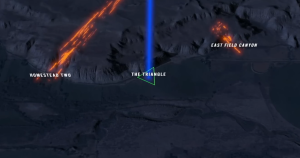
For longtime followers of Skinwalker Ranch, the Triangle remains fascinating because it keeps acting like a crossroads for different kinds of evidence. It is not just one failed camera or one strange screen reading that holds attention. It is the way experiments involving signals, aircraft, sensors, rockets, drones, and monitoring equipment often seem to return to the same general area. That does not prove a single theory, and it does not mean every malfunction is connected. But it does explain why the team keeps treating the Triangle as a place worth testing again.
The bigger mystery is whether the ranch is producing true anomalies or whether a difficult environment is creating patterns that only appear unusual at first glance. Both possibilities are worth considering. A dusty, rocky, signal-challenged outdoor location can create many false leads. At the same time, repeated issues in a specific area should not be ignored simply because equipment can fail in ordinary ways. The value comes from comparing events, repeating tests, and looking for consistency across different tools.
That is why equipment failures near the Triangle continue to raise questions. They sit in the space between technical frustration and possible clue. Most malfunctions may eventually have simple explanations, from weak batteries to electromagnetic noise or software errors. But if the same zone keeps affecting different instruments in similar ways, the team may have a reason to investigate the location itself rather than only the equipment. Until stronger data provides a clearer answer, the Triangle remains one of the ranch’s most difficult and intriguing testing grounds.

