
The Mesa has become one of the most watched locations in the Skinwalker Ranch investigation, partly because every scan, drill attempt, and unusual reading seems to raise a new question. Ground Penetrating Radar, or GPR, is one of the tools that can make the Mesa feel even more mysterious because it allows the team to look beneath the surface without immediately digging into it. But GPR data is not always simple to read, especially in a place filled with rock layers, possible voids, moisture changes, mineral deposits, clay, and uneven underground structures. A confusing image on a screen does not automatically mean something extraordinary is hidden below. At the same time, it can still point to a feature worth studying. That balance is what makes the Mesa so compelling: the data may be real, but the meaning remains open.
Mesa Makes Ground Scans So Complicated
The Mesa has often been treated as more than just a backdrop on Skinwalker Ranch. It sits like a massive wall on the edge of the investigation, drawing attention whenever the team discusses buried features, unusual materials, or difficult drilling conditions. When GPR is used in or around a location like the Mesa, the goal is to send radar energy into the ground and read the reflected signals that come back. Those reflections can suggest changes beneath the surface, such as a different type of rock, a possible void, a buried object, or a shift in underground structure. However, the image produced by GPR is not a clear photograph of what lies below.
That is one reason the Mesa can be so difficult to interpret. GPR depends heavily on how radar waves move through the material beneath the surface, and not all ground behaves the same way. Dry sand, solid rock, clay-rich soil, fractured stone, and metal-rich zones can all produce very different readings. If the radar signal enters a complicated mix of materials, the data can look messy, broken, or layered in ways that are hard to separate. What appears to be a strange shape on a scan may be a real underground feature, but it may also be a reflection caused by changing geology.
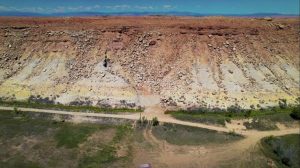
Moisture is one of the biggest reasons GPR results can become difficult to read. Water affects how radar waves travel, and even small changes in moisture can alter the strength, speed, and clarity of the returning signal. If one part of the Mesa holds more moisture than another, the scan may show sudden changes that look important but are actually tied to the ground conditions. Clay can make the problem even more difficult because it tends to absorb or weaken radar energy. In a rugged geological setting, that means the signal may not reach as deep or return as clearly as expected.
The type of rock also matters. A clean, consistent layer of stone may produce a more understandable pattern, while broken rock, mixed sediment, mineral veins, and fractured layers can create overlapping reflections. The Mesa appears to be the kind of environment where a scan could detect many natural changes at once. That does not make the data useless, but it does mean the team has to be careful before connecting a GPR anomaly to any larger theory. The mystery begins when a scan shows something unusual, but the real work begins when the team tries to determine whether it is natural, man-made, or something still unexplained.
Strange GPR Readings Raise Bigger Questions
GPR becomes especially interesting on Skinwalker Ranch because the Mesa is already surrounded by unanswered questions. When a scan shows an unusual reflection, people naturally wonder whether it could point to a hidden void, a buried obstruction, unusual material, or an underground structure. That reaction is understandable because the show has spent a lot of time exploring whether something beneath or inside the Mesa may be connected to the larger ranch mystery. Still, a radar anomaly is not the same thing as a confirmed discovery. It is a signal that may suggest a feature worth investigating further.
Metal can create particularly strong GPR reflections, which is why unusual readings sometimes attract attention quickly. A buried metallic object, a mineral-rich seam, or even certain kinds of conductive material can cause signals to bounce back sharply. To a viewer, that may look like a dramatic clue, but the interpretation depends on context. The team would need to compare the scan with geological information, drilling results, magnetic readings, and other instruments before drawing a stronger conclusion. Without that comparison, the GPR image remains a clue rather than an answer.
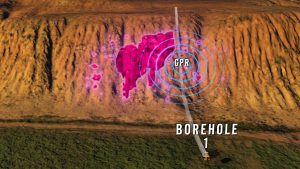
Depth is another factor that can make the Mesa difficult to understand. GPR does not see equally well at every depth, and deeper targets are often harder to detect clearly. As radar waves travel farther into the ground, they can lose strength, scatter, or become distorted by layers above the target. A feature that appears deep in the data may be real, but its size, shape, and exact location can be difficult to judge. That uncertainty is one reason the team may treat GPR results as a guide for future testing rather than a final map.
Why the Mesa Mystery Still Depends on Better Data
The importance of GPR inside the Mesa is that it gives the team a way to choose where to investigate next. Even when the data is difficult to read, it can still highlight areas that deserve comparison with other tests. If a GPR anomaly lines up with magnetic changes, drilling resistance, unusual materials, or past visual observations, that overlap becomes more meaningful. A single scan can be misleading, but multiple methods pointing toward the same location may help narrow the mystery. That is why the Mesa remains valuable even when the results are not easy to interpret.
The careful approach is to treat GPR as one piece of a larger puzzle. It can suggest where something unusual may be located, but it cannot always explain what that feature is. For the team, the next step would be to compare radar data with geology, depth estimates, material samples, and repeat scans from different angles. If the same anomaly appears under different conditions, it becomes harder to dismiss. If it disappears or changes dramatically, that may suggest the original reading was shaped by surface conditions or instrument limits.
For people interested in the mystery, this is where the Mesa becomes more fascinating rather than less. A confusing scan does not ruin the investigation; it shows how difficult the underground story may be to read. The Mesa may contain natural fractures, mineral layers, hidden cavities, or objects that produce strong reflections. Some readings may eventually prove ordinary, while others could point to features that deserve deeper study. Until those possibilities are tested, the GPR data remains suggestive rather than conclusive.
That unresolved quality is exactly why the Mesa continues to hold attention. It sits at the edge of the ranch like a locked archive, offering partial signals instead of clear answers. GPR gives the team a way to listen beneath the rock, but the language it speaks is full of echoes, distortions, and competing explanations. The mystery is not simply whether something is hidden inside the Mesa. The bigger question is whether the team can gather enough clean, repeatable data to understand what the scans are really showing.
For now, the difficulty of reading GPR data should not be seen as a weakness in the investigation. It is part of the challenge of studying a complex geological environment with tools that require careful interpretation. The Mesa may still hold clues, but those clues must be separated from natural noise, material changes, and technical limitations. That is what makes the topic worth watching: the answer may not come from one dramatic scan, but from the slow process of connecting data points that survive repeated testing. Until then, the Mesa remains one of Skinwalker Ranch’s most difficult and intriguing mysteries.
