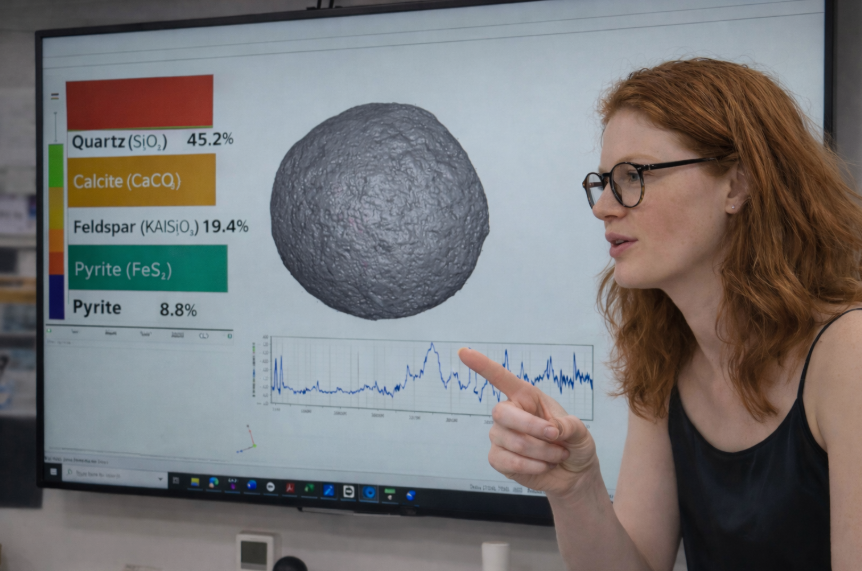
As the search nears its fever pitch, a chilling laboratory analysis of a perfectly spherical stone and gunpowder-stained relics unearths a violent legacy that changes the island’s story forever. For years, the hunt has been fueled by the glimmer of gold and the whisper of ancient manuscripts. However, the latest findings from the laboratory have shifted the atmosphere from one of hopeful greed to one of profound, unsettling dread. The island is no longer just a puzzle to be solved; it is a crime scene that has been waiting centuries for a witness. Emma Culligan, the team’s lead researcher and metallurgical expert, has just provided the testimony that could shatter everything the fellowship thought they knew about the Money Pit.
The Unnatural Precision of the Sphere
It began with a single object pulled from the muck—a stone that looked too deliberate, too intentional to be a product of the Atlantic’s chaotic tides. While the team has found countless rocks shaped by centuries of erosion, this particular specimen possessed a geometry that defied the natural order. Under the harsh, clinical lights of the research center, Emma’s analysis revealed a surface that was almost perfectly round, a feat of engineering that points toward a purpose far more sinister than a simple marker. This isn’t a stone shaped by water; it is a stone shaped by man, designed with a precision that suggests it was a vital component of a larger, perhaps lethal, mechanism.
The discovery of this sphere has sent a wave of tension through the War Room. If the stone was part of a sophisticated defense system—a trigger for the infamous flood tunnels or a weight for a crushing trap—it confirms that whoever designed the island’s defenses was not just a clever architect, but an engineer of death. The cold, hard reality of the sphere suggests that the island was never meant to be reopened. It was a vault designed to remain sealed at any cost, and the precision of the object proves that the creators had the technology and the malice to ensure no one would ever walk away with their prize.
Traces of Fire and the Pirate Ghost
While the stone sphere provided the structural mystery, a heavily corroded cannonball provided the explosive truth. For decades, the presence of pirates on Oak Island was a romantic theory, a tale told to tourists to explain the lure of the North Atlantic. But Emma’s microscopic examination of the iron relic has unearthed something far more visceral: the undeniable chemical signature of ancient gunpowder. This wasn’t just a discarded weight from a passing ship. The residue found deep within the pits of the iron suggests a high-velocity impact, a moment of violence that occurred right on the shores of this tiny island.
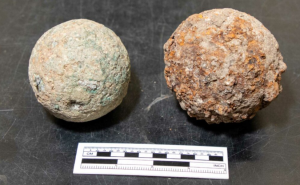
This is the smoking gun that links the island’s construction to a brutal maritime conflict. The gunpowder traces indicate that a PIRATE presence wasn’t just a fleeting visit; it was a desperate, high-stakes defense. The implications are staggering. If cannons were being fired on Oak Island, it means the treasure wasn’t just buried—it was fought for. The laboratory results paint a cinematic picture of a dark history where the smell of sulfur and the roar of black powder filled the air as men died to protect what lay beneath. This wasn’t a quiet deposit of wealth; it was a warzone, and the soil is still saturated with the remnants of that prehistoric fury.
The Million Dollar Curse of the Dark History
The convergence of these two clues—the engineered stone and the powder-stained iron—leads to a singular, terrifying conclusion. We are no longer looking for a simple chest of coins. The level of effort required to build these defenses, combined with the military-grade resistance suggested by the cannonball, points to a secret worth more than any MILLION dollar hoard. The history of Oak Island is not one of exploration, but one of concealment and extreme violence. Emma’s findings suggest that the “dark history” mentioned in hushed tones is very real: a narrative of a lost civilization or a rogue fleet that committed atrocities to ensure their legacy remained in the dark.

As the excavators dig deeper into the void, the pressure is no longer just physical—it is psychological. The fellowship is realizing that they are retracing the steps of men who were willing to kill to keep their secrets. The island is beginning to reveal its true face, and it is a face scarred by war and obsession. Every inch of mud removed brings the team closer to a truth that might be too heavy to carry. The search is no longer a quest for riches; it is an excavation of a nightmare. With the end of the season in sight, the question is no longer what they will find, but what the island will do to them once the final seal is broken
