
Corsica’s Nazi Treasure takes Josh Gates into one of the most gripping World War II mysteries ever told, as he follows the trail of hidden loot, wartime desperation, and a legend that still refuses to die.
Corsica’s Nazi Treasure Still Feels Like One of World War II’s Great Unfinished Stories
Corsica’s Nazi Treasure carries the kind of weight only a wartime mystery can hold. It is not just a story about missing gold or buried wealth. It is a story about collapse, secrecy, and the frantic final days of a regime trying to hide the evidence of its own crimes. That is what makes the legend so powerful. It reaches beyond treasure hunting and into the emotional debris left behind by World War II, where every rumor of plundered wealth comes wrapped in violence, fear, and the desperate urge to outrun history.
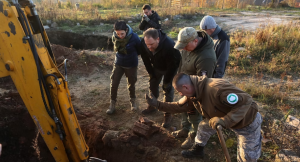
The idea of “Rommel’s Treasure” has fascinated historians and adventurers for years because it sits at the intersection of fact and legend. North Africa, the Mediterranean, and the island of Corsica form a trail that feels almost cinematic, yet the story itself is grounded in the very real chaos of the war’s final years. When armies retreated, they often left behind not just weapons and wreckage, but hidden cargo, stolen assets, and secrets meant never to surface again. That is why the search remains so compelling. It is not only about what may have been concealed. It is about why anyone would go to such lengths to conceal it in the first place.
Josh Gates steps into that tension with the kind of curiosity that has made Expedition Unknown so effective. He does not approach the story as a simple treasure hunt. He approaches it as a question history has never fully answered. Corsica’s Nazi Treasure becomes powerful because it treats the island not as a backdrop, but as a possible final chapter in a wartime trail that still has unfinished business.
Josh Gates Follows the Trail Through Archival Clues and Dangerous Terrain
What gives this episode its pulse is the way it moves between archive and fieldwork. Gates does not simply stand over old documents and speculate. He follows the evidence into the landscape itself, where the mystery becomes physical. Corsica’s rugged terrain, coastal isolation, and wartime history create the perfect setting for a story about something hidden in plain sight. In adventure television, the best stories are the ones where the past feels like it can still be touched. This episode leans into that feeling beautifully.
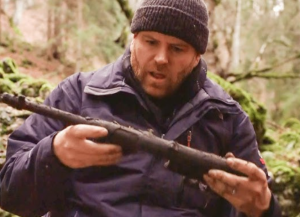
The search for Corsica’s Nazi Treasure also works because it carries a sense of moral shadow. Wartime treasure is never a clean object. It is tied to theft, fear, and the wreckage of human conflict. That gives the episode a deeper emotional texture than a typical lost-object story. Gates is not chasing glitter for its own sake. He is tracing the remnants of a world in collapse, trying to separate myth from memory and rumor from evidence. That balance between excitement and seriousness gives the episode its strength.
As he moves through the investigation, the tension never quite fades. Every document, every lead, every possible location seems to suggest that something real may still be out there. That is what keeps the audience hooked. The story does not promise easy answers. It promises the thrill of the search. And in a mystery rooted in World War II, the search itself becomes part of the emotional weight. The treasure is important, but the human story behind it is what makes the episode linger.
Why This World War II Mystery Still Captures the Imagination
Part of the reason Corsica’s Nazi Treasure remains so compelling is that World War II has left behind more unresolved legends than most people realize. The war ended decades ago, but its secrets continue to resurface in books, films, and expeditions because the conflict was so vast, so chaotic, and so full of hidden movements. A treasure story tied to that era feels bigger than a single cache. It feels like one more fragment of a global conflict that never fully stopped echoing.

There is also something deeply human about the desire to find what others tried to bury. Hidden treasure stories endure because they promise revelation. They suggest that history can still be surprised, that the past may not be as closed as it seems. Gates understands that emotional pull. He knows that the real power of an episode like this lies not in the gold itself, but in the possibility that long-buried wartime secrets might finally be given shape, place, and context.
In the end, Corsica’s Nazi Treasure works because it is more than a hunt for loot. It is a journey into the dark corners of history, where legend and fact are still tangled together. Josh Gates gives that story momentum, humanity, and a sense of purpose. He treats the search not as a fantasy, but as an act of historical recovery. And that is what makes the episode memorable: the feeling that even after all these years, World War II may still have one more secret left to give up.
